Insulation – Backup

Stay Cool! Upgrade Your Old Insulation
Ecotelligent Homes is an award-winning insulation contractor serving homeowners in the Metro Detroit area since 2009 with professionally installed cellulose blown in insulation and closed cell spray foam insulation. Our skilled and trained on-staff insulation crews install the following insulation services to meet ENERGY STAR standards and help your family enjoy a comfortable home all year long:
DOES YOUR METRO DETROIT HOME HAVE COLD AND DRAFTY ROOMS DURING THE WINTER?
Stop looking for the best space heater to improve the comfort of your cold and drafty rooms. A space heater is an inefficient Band-Aid that ultimately does not answer the question of ‘how to heat a cold room?’. Air sealing and insulation improvements professionally installed by Ecotelligent Homes will answer your question of ‘how to warm up a cold room?’ and will help your family enjoy year-round comfort and energy savings.
IS IT TOO WARM TO SLEEP IN YOUR ROOM IN THE SUMMER?
Summers can be hot and humid in Michigan--that's why families in Royal Oak bungalows, Bloomfield Township colonials, and Plymouth cape cods have all asked us ‘how to cool down at night?’ and ‘how to keep the house cool?’. They are impressed with how comfortable their homes are after Ecotelligent Homes installs air sealing and insulating, and you can be too.
Call 248-291-7815 for Ecotelligent Homes to professionally install your insulation for year round comfort!
Blog Posts
Attic storage vs attic insulation – what to know before you build a platform
Thinking about adding attic storage? Learn how attic insulation, airflow, and structure work together – and how to avoid moisture, comfort, and performance issues.
2026 Pole barn insulation guide for Michigan: Spray foam vs fiberglass rolls
Trying to insulate a pole barn in Michigan? Learn the pros and cons of spray foam, fiberglass rolls, and other pole barn insulation options.
Installed correctly? Take a closer look at your attic insulation
Attic insulation may look fine at first glance, but improperly installed baffles can affect ventilation, moisture control, and long-term home performance.
Case Studies
Using Ann Arbor insulation rebates to finally fix uneven temperatures
See how an Ann Arbor homeowner used A²ZERO and DTE insulation rebates to fix uneven temperatures and improve comfort. Learn what Ecotelligent Homes found, what we upgraded, and how rebates reduced project costs by 39%.
Case study: Fixing drafty rooms and high bills in a midcentury Royal Oak home
Case study: Fixing drafty rooms and high bills in a midcentury Royal Oak home Attic Insulation, Crawlspace Insulation, Insulation, Mold remediaton, Rim Joist Insulation, Spray Foam Insulation Estimated reading time: 6 minutes “Overall, Amanda’s team did a stellar job from start to finish, and I would highly recommend them.” – Steve W. in Royal Oak, […]
Goodbye to cold floors: An Ann Arbor insulation and HVAC transformation
Cold floors to cozy living with an Ann Arbor insulation and HVAC transformation Air Sealing, Attic Insulation, Furnace, Insulation, Mold, Rim Joist Insulation, Spray Foam Insulation Estimated reading time: 6 minutes “The temperature in rooms is much more stable… Our house is much more efficient.” -Finn D. in Ann Arbor, MI How old is […]
THE ECOTELLIGENT DIFFERENCE
Ecotelligent Homes is a home performance contractor, which means we are a one-stop-shop and we manage the project from start to finish. We follow a three-step process when assessing and improving the comfort and energy efficiency of your home.

We can identify the source of your comfort, health and efficiency issues and present you with a solution to resolve the problem at its root.

Our licensed and insured team will install your improvements to industry-leading standards.

Our quality assurance check confirms the quality of our work and its impact on your home’s energy efficiency, comfort and health.
Attic storage vs attic insulation – what to know before you build a platform
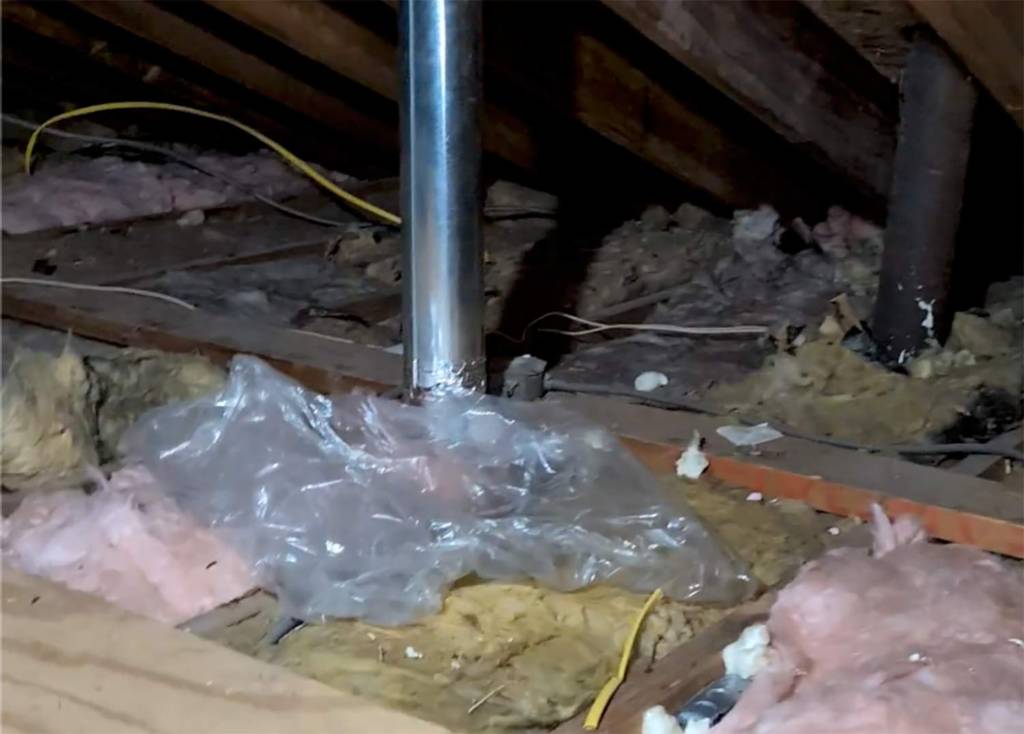
A homeowner recently shared ths video and asked, “Can I add storage up here?”
It’s a good question, and one we hear pretty often.
The short answer is that storage is possible, but it’s important to do it right.
We’ll walk through the main considerations below. And if you’d like to talk through what makes sense for your home, give us a call at (248) 291-7815 or send us a message for a free consultation.
What’s going on in your attic
Most attics in Michigan are vented. Outside air enters through soffits and exits near the ridge, carrying moisture out.
Your attic insulation sits on the floor, separating your living space from the attic.
Here’s the key detail: insulation like cellulose slows heat, but it doesn’t stop air. Warm, moist air can move through it and condense on cold surfaces.
Ventilation helps manage that moisture - unless something disrupts it.
Where storage causes problems
We commonly see:
- Compressed attic insulation, reducing performance
- Blocked airflow from soffit vents
- Moisture getting trapped instead of vented
There’s also a structural piece to consider.
Many attic joists are 2x4 or 2x6. These are typically designed to support drywall and light loads - not full storage platforms. Adding weight without reinforcing the structure may lead to sagging or long-term issues.
What are your options?
It depends on how you want to use the space.
Conditioned attic (spray foam at the roofline)
If you want full, usable storage space, insulating the roof deck with spray foam brings the attic inside the home’s thermal boundary.
This eliminates the need for ventilation and helps prevent condensation. It’s a bigger investment, but it creates clean, usable space.
Limited or raised storage
You can build platforms above the joists to avoid compressing insulation and maintain airflow. This could require additional framing to safely carry the load.
Focus on performance + store elsewhere
In many cases, the most cost-effective option is to improve attic insulation at the floor - often with blown-in cellulose - and keep the attic dedicated to performance.
Then add storage elsewhere, like a small shed or garage solution.
How to think about it
Your attic is either:
- a vented system that needs airflow, or
- a conditioned space that doesn’t
Mixing the two is where problems tend to show up.
Experience matters here
We’ve seen a lot of attics where small changes - compressed insulation, blocked baffles, added weight - led to bigger issues over time.
You have options. The right one depends on how you want to use the space and how your home is built.
If you’d like help talking through what makes sense for your home, we’re happy to help.
Send us a message, or give us a call to talk about a home energy audit or insulation project for your home: (248) 291-7815

Ecotelligent Homes
Since 2009, Ecotelligent Homes has completed more than 3,000 projects in Michigan. If you need help with new insulation, efficient HVAC, or abatement services, give us a call anytime: (248) 291-7815. Satisfaction guaranteed.
Got a project in mind?
Tell us about your project, and we'll send ballpark pricing in 2 minutes or less.
Categories
- Air Quality
- Air Sealing
- Air Source Heat Pump
- Asbestos
- Attic Insulation
- Cellulose Insulation
- Central A/C
- Crawlspace Encapsulation
- Crawlspace Insulation
- Duct Sealing
- Ecotelligent News
- Energy Audit
- Furnace
- Garage Insulation
- Geothermal Heat Pumps
- Guest Blog Post
- Heating & Cooling
- Homepage feature
- Insulation
- Mold
- Mold remediaton
- Renewable Energy
- Rim Joist Insulation
- Solar Energy
- Spray Foam Insulation
- Uncategorized
- Wall Insulation
2026 Pole barn insulation guide for Michigan: Spray foam vs fiberglass rolls

Pole barns are extremely common across Michigan, and many homeowners eventually start researching pole barn insulation when they want to heat a workshop or protect equipment.
But when it comes to insulation, pole barns present a unique challenge.
Unlike traditional homes, pole barns are typically built with post-frame construction, metal siding, and large open cavities. That combination can lead to major temperature swings, condensation, and uncomfortable indoor conditions if the building isn’t insulated properly.
In this guide, we’ll walk through the most common pole barn insulation options, including spray foam and fiberglass rolls, and explain which solutions tend to work best in Michigan’s climate.
Please note that pole barn insulation can vary significantly depending on how the building was constructed and how you plan to use it. If you'd like help evaluating your options, give us a call at (248) 291-7815, or reach out to get a free consultation.
Since 2009, Ecotelligent Homes has completed more than 6,000 energy audits and 3,000 projects for homeowners across Southeast Michigan. We stand behind every insulation project with a price match guarantee and satisfaction guarantee.
The $500 pole barn insulation mistake
One of the most common mistakes we see is installing fiberglass batt insulation directly against metal siding without an air barrier or proper cavity design.
Fiberglass itself isn’t the problem. The problem is that pole barns often have large wall cavities and metal siding that gets very cold in winter. When warm indoor air reaches that cold metal surface, condensation forms.
That moisture can soak the fiberglass and lead to mold, corrosion, and wood rot.
The frustrating part is that the fix is often simple. Adding a proper air barrier, liner panel, or spray foam layer during construction can prevent the issue. But once insulation is installed incorrectly, it can mean removing and reinstalling materials, which is where that $500–$1,000 correction cost often comes from.
The good news is that there are insulation approaches that avoid this problem entirely. Let's get into it.
Table of contents
- Why pole barns need insulation
- Common pole barn insulation options
- Spray foam insulation for pole barns
- Pole barn insulation rolls (fiberglass)
- Can cellulose insulation work in a pole barn?
- Recommended insulation R-values for Michigan pole barns
- Common pole barn insulation mistakes
- Which pole barn insulation works best?
Why pole barns need insulation
Many older pole barns were built without insulation because they were used only for equipment storage.
Today, however, pole barns are commonly used as:
- heated workshops
- vehicle storage
- hobby spaces
- home gyms or recreation rooms
- finished “barndominiums”
When a pole barn is heated or occupied regularly, insulation becomes essential.
Proper pole barn insulation helps:
Control temperature: Michigan winters can be harsh, and uninsulated metal buildings lose heat quickly.
Prevent condensation: Metal siding and roofing can collect condensation when warm indoor air meets cold surfaces.
Protect equipment and tools: Moisture and temperature swings can damage tools, vehicles, and stored items.
Reduce energy costs: Insulated buildings require much less energy to heat or cool.
Common pole barn insulation options
Several insulation materials can be used in pole barns. Each has advantages and drawbacks depending on how the building is constructed and used.
| Insulation | Best for | Key drawback |
|---|---|---|
| Closed-cell spray foam | Heated pole barns, workshops | Higher upfront cost |
| Fiberglass insulation rolls | Budget builds, framed interiors | Air leaks and condensation risk |
| Cellulose insulation | Finished pole barns with drywall | Less common in open post-frame walls |
Because pole barns often use metal siding and large wall cavities, insulation that also provides air sealing and moisture control tends to perform best.
Spray foam insulation for pole barns
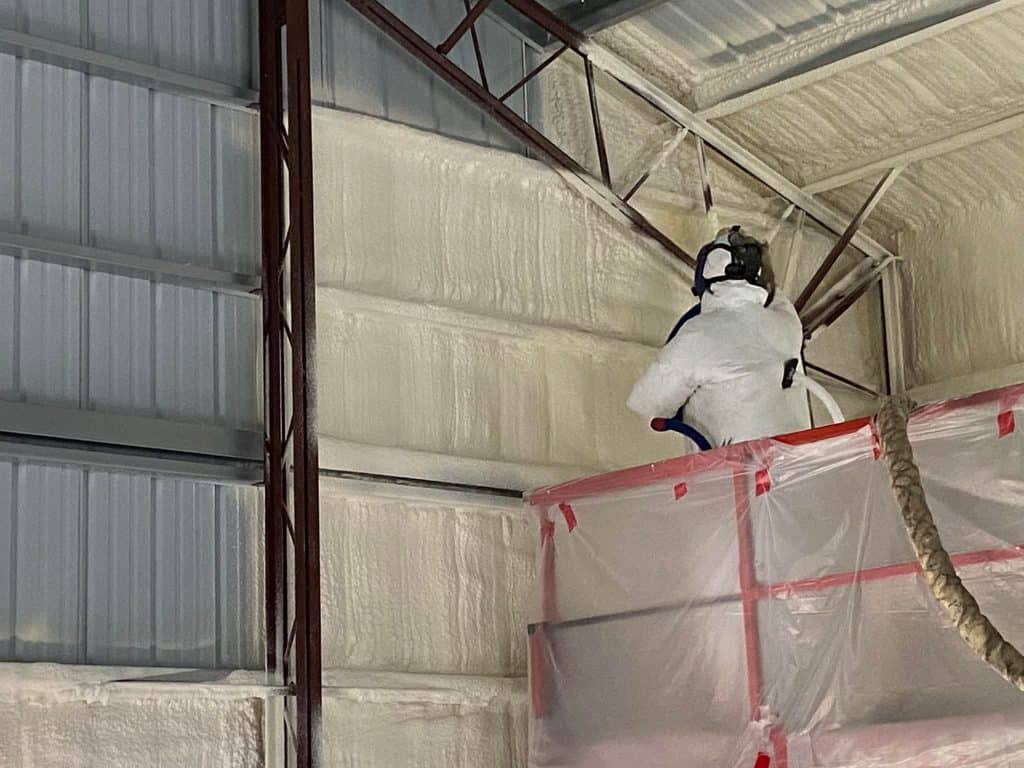
Spray foam insulation is often considered the best-performing insulation for pole barns, particularly when the building has metal siding or is intended to be heated.
Two types of spray foam insulation are commonly used in buildings:
Open-cell spray foam
- lower cost
- good air sealing
- softer and more vapor permeable
Open-cell spray foam is often used inside traditional framed walls in homes. However, it is generally not recommended for most pole barns, particularly those with metal siding or roofing. Because it allows moisture to move through the foam, it can increase the risk of condensation forming on cold metal surfaces.
Closed-cell spray foam
- higher R-value per inch
- strong moisture barrier
- adds structural rigidity
Closed-cell spray foam is typically the better choice for pole barns. When applied directly to metal walls or roof panels, it creates a continuous air and moisture barrier that helps prevent condensation and improve overall energy performance.
Closed-cell spray foam is especially effective in pole barns because it:
- seals air leaks
- helps prevent condensation on metal walls and roofs
- provides excellent insulation in limited space
For these reasons, closed-cell spray foam is often considered the best-performing insulation option for pole barns in Michigan, particularly if the building will be heated or used regularly.
Pole barn insulation rolls (fiberglass)

Fiberglass insulation rolls are one of the most common insulation materials people search for when planning a pole barn project.
They are widely available and relatively inexpensive.
Fiberglass insulation rolls are typically installed between framing members or girts and may be covered with drywall or another interior finish.
Advantages include:
- lower material cost
- easy availability
- familiar installation process
However, fiberglass insulation has some limitations in pole barns.
Fiberglass does not seal air leaks, and in metal buildings it can allow moisture to move through the insulation and condense on cold surfaces.
Common issues include:
- drafts and air leakage
- condensation behind insulation
- reduced performance if insulation becomes damp
In general, we recommend that Michigan homeowners choose a pole barn insulation system that provides air sealing and moisture control, such as closed-cell spray foam.
Can cellulose insulation work in a pole barn?
Cellulose insulation is commonly used in homes, especially for attics and dense-packed wall cavities.
In pole barns, however, cellulose is used less often because the wall structure is different.
Cellulose insulation typically requires:
- enclosed framing cavities
- sheathing or drywall
- dense-pack installation
If a pole barn is finished with interior walls and properly framed cavities, cellulose insulation can work well.
But for many open post-frame buildings, spray foam or other insulation systems are easier to install and perform better.
Recommended insulation R-values for Michigan pole barns
Michigan is located in Climate Zone 5, which means insulation levels should be designed for cold winters.
Typical recommended R-values include:
| Building Area | Recommended R-Value |
|---|---|
| Pole barn walls | R-19 to R-30 |
| Pole barn ceiling or roof | R-38 to R-49 |
| Slab edge or foundation areas | R-10 to R-15 |
Actual insulation levels may vary depending on how the pole barn is used and whether it will be heated year-round.
Buildings used only occasionally may require less insulation than fully conditioned workshops or living spaces.
Common pole barn insulation mistakes
Insulating a pole barn incorrectly can lead to performance problems later.
Some common mistakes include:
Ignoring air sealing
Insulation alone does not stop air movement. Air leaks can dramatically reduce insulation performance.
Moisture problems
Condensation is a common issue in metal buildings, particularly when insulation systems do not include proper moisture control.
Improper vapor barriers
Incorrect vapor barrier placement can trap moisture inside walls or ceilings.
Choosing insulation based only on cost
While fiberglass insulation rolls are inexpensive upfront, they may not deliver the best long-term performance in many pole barns.
Which pole barn insulation works best?

The best pole barn insulation depends on how the building will be used.
However, spray foam insulation often provides the most reliable performance in Michigan pole barns.
| Insulation Type | Best For | Key Advantages |
|---|---|---|
| Spray foam insulation | Heated workshops, finished pole barns | Air sealing, moisture control, durability |
| Fiberglass insulation rolls | Storage buildings or budget builds | Low upfront cost |
| Cellulose insulation | Fully framed pole barns with interior walls | Good thermal performance |
For many homeowners, spray foam insulation is the safe and efficient top choice, offering the best combination of energy efficiency, moisture control, and long-term durability.
Why homeowners choose Ecotelligent Homes
Choosing the right insulation system is important for both comfort and long-term building performance.
Ecotelligent Homes helps homeowners across Southeast Michigan design insulation solutions that work with their building and their goals.
Since 2009, Ecotelligent Homes has completed more than 3,000 home performance projects, helping homeowners improve comfort, reduce energy costs, and protect their homes from moisture problems.
If you're planning to insulate a pole barn, the right approach depends on how the building was constructed and how you plan to use it.
The team at Ecotelligent Homes can evaluate your building and recommend insulation options that improve comfort, control moisture, and reduce energy costs.
Book a free consultation, or call (248) 291-7815 to get started.
Ecotelligent Homes
Since 2009, Ecotelligent Homes has completed more than 3,000 projects in Michigan. If you need help with new insulation, efficient HVAC, or abatement services, give us a call anytime: (248) 291-7815. Satisfaction guaranteed.
Got a project in mind?
Tell us about your project, and we'll send ballpark pricing in 2 minutes or less.
Categories
- Air Quality
- Air Sealing
- Air Source Heat Pump
- Asbestos
- Attic Insulation
- Cellulose Insulation
- Central A/C
- Crawlspace Encapsulation
- Crawlspace Insulation
- Duct Sealing
- Ecotelligent News
- Energy Audit
- Furnace
- Garage Insulation
- Geothermal Heat Pumps
- Guest Blog Post
- Heating & Cooling
- Homepage feature
- Insulation
- Mold
- Mold remediaton
- Renewable Energy
- Rim Joist Insulation
- Solar Energy
- Spray Foam Insulation
- Uncategorized
- Wall Insulation
Installed correctly? Take a closer look at your attic insulation
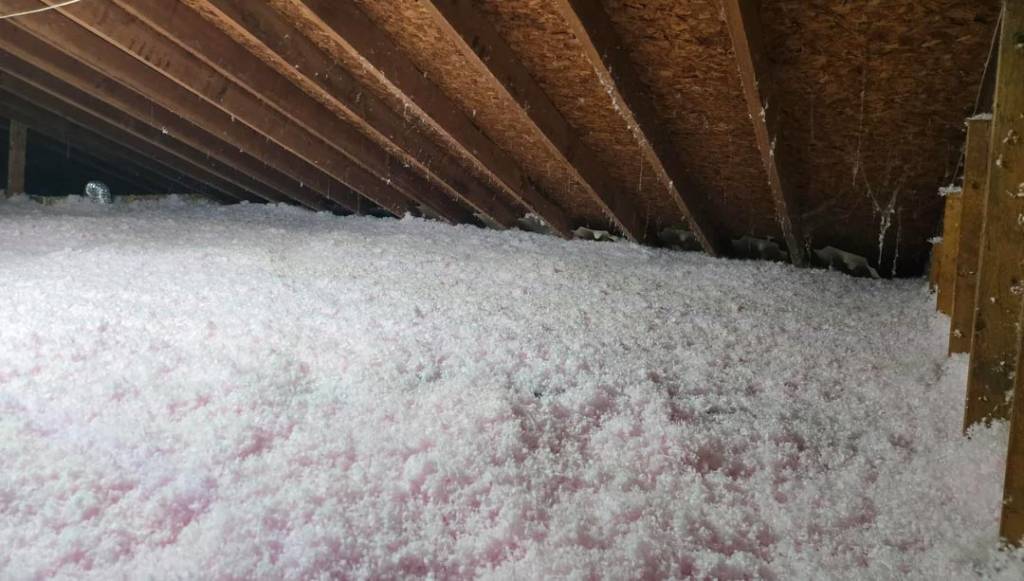
Imagine this: you just hired an insulation contractor to install attic insulation for your home here in Michigan. At first glance, everything looks good.
A thick, even layer of insulation covers the attic floor. The job appears complete. But look closer.
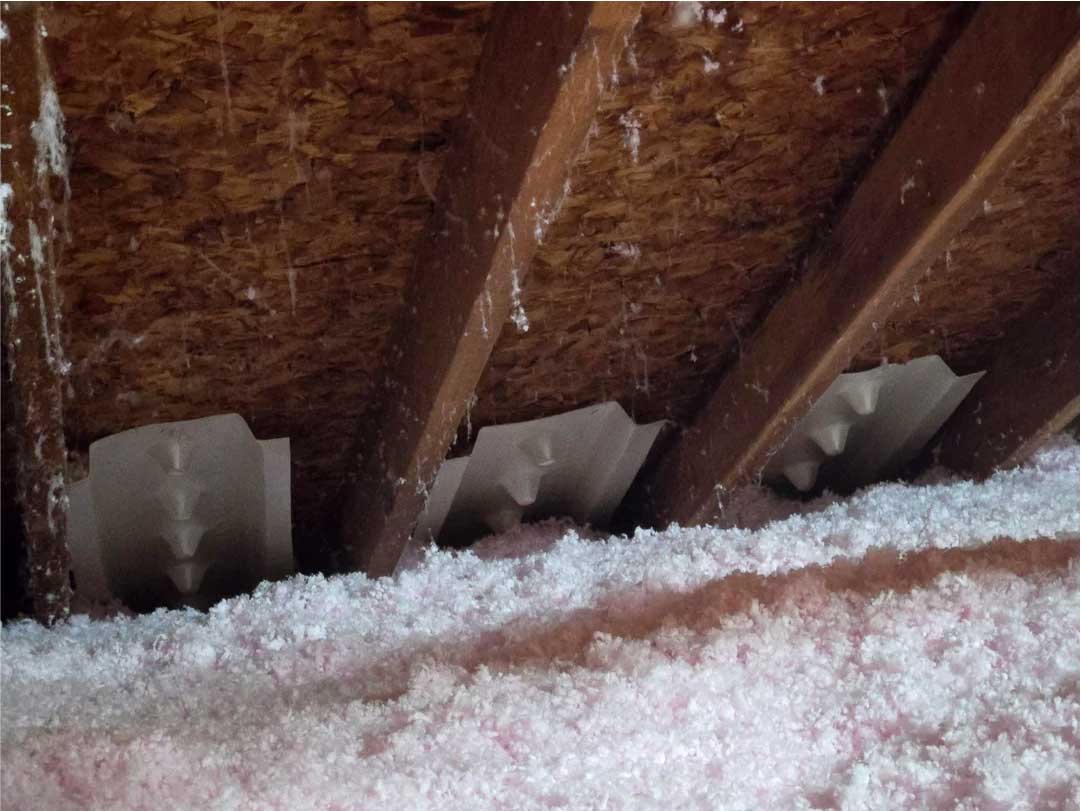
Along the edges of the attic, ventilation baffles help maintain airflow from the soffit vents into the attic. These small components play an important role in protecting your home.
In this case, the baffles had been installed backwards.
Why attic baffles matter
Your attic needs proper airflow to manage heat and moisture. Ventilation allows fresh air to enter through soffit vents and move upward through the attic, helping prevent moisture buildup and improving insulation performance.
Baffles help maintain this airflow by keeping insulation from blocking the vents.
When installed correctly, they create a clear channel for air movement. When installed incorrectly, airflow can be restricted, which may contribute to moisture accumulation and reduced insulation effectiveness.
Over time, this can affect comfort, energy efficiency, and the long-term durability of your home.
Insulation works best as part of a complete system
Insulation, air sealing, and ventilation work together to protect your home.
Proper attic insulation helps:
-
Improve comfort throughout the year
-
Reduce heating and cooling costs
-
Prevent moisture-related issues
-
Protect your roof and attic structure
-
Support long-term home durability
Details like correct baffle installation help ensure the entire system performs as intended.
Experience and attention to detail make the difference
Since 2009, Ecotelligent Homes has completed thousands of insulation and energy efficiency projects across Michigan. Our approach focuses on the complete attic system, including insulation, ventilation, and air sealing.
We follow best practices to ensure every component is installed correctly and supports long-term home performance.
This attention to detail helps homeowners improve comfort, efficiency, and peace of mind.
When in doubt, a professional evaluation can help
If you’re unsure whether your attic insulation and ventilation were installed correctly, a professional inspection can help identify potential issues and ensure your home is properly protected.
Send us a message, or give us a call to talk about a home energy audit or insulation project for your home: (248) 291-7815
Ecotelligent Homes
Since 2009, Ecotelligent Homes has completed more than 3,000 projects in Michigan. If you need help with new insulation, efficient HVAC, or abatement services, give us a call anytime: (248) 291-7815. Satisfaction guaranteed.
Got a project in mind?
Tell us about your project, and we'll send ballpark pricing in 2 minutes or less.
Categories
- Air Quality
- Air Sealing
- Air Source Heat Pump
- Asbestos
- Attic Insulation
- Cellulose Insulation
- Central A/C
- Crawlspace Encapsulation
- Crawlspace Insulation
- Duct Sealing
- Ecotelligent News
- Energy Audit
- Furnace
- Garage Insulation
- Geothermal Heat Pumps
- Guest Blog Post
- Heating & Cooling
- Homepage feature
- Insulation
- Mold
- Mold remediaton
- Renewable Energy
- Rim Joist Insulation
- Solar Energy
- Spray Foam Insulation
- Uncategorized
- Wall Insulation
Attic insulation cost per square foot in Michigan 2026: Compare R-values and materials

For most Michigan homeowners, attic insulation is the single most cost-effective upgrade for improving comfort and lowering energy bills. It's also one of the easiest ways to fix cold rooms in the winter and hot upstairs bedrooms in summer.
But how much does attic insulation actually cost in Michigan? And how do different materials compare when it comes to R-value and long-term performance?
Let’s break it down.
This guide gives realistic Michigan pricing, explains R-values in plain English, and shows which materials actually make sense for our climate and housing stock. For a home-specific estimate with rebates and financing options in Southeast Michigan, give us a call at (248) 291-7815 or send us a message.
Since 2009, Ecotelligent Homes has completed over 6,000 energy audits and 3,000 projects for homeowners across the Metro Detroit area. Price match and satisfaction guaranteed.
Table of contents
- Average attic insulation cost per square foot in Michigan
- Cost breakdown by project size
- What affects attic insulation cost?
- Understanding R values for Michigan homes
- R value by insulation material
- Best attic insulation materials for Michigan
- DIY vs professional attic insulation
- How to lower your attic insulation cost
- Why choose Ecotelligent Homes?
Average attic insulation cost per square foot in Michigan
In Michigan, attic insulation typically costs between $1.50 and $6.00 per square foot, depending on the material, access, and how much insulation is needed to reach recommended R-values.
Here are typical ranges we see for professional installation:
| Insulation type | Typical cost per sq ft |
|---|---|
| Loose-fill cellulose | $1.50 – $3.50 |
| Fiberglass (blown or batts) | $1.50 – $3.50 |
| Closed-cell spray foam | $4.00 – $8.00+ |
These are real-world Michigan numbers, not national averages. They assume enough thickness to meet ENERGY STAR recommendations for our climate.
Cost breakdown by project size
| Attic size | Typical total cost |
|---|---|
| 1,000 sq ft | $2,000 – $4,000 |
| 1,500 sq ft | $3,000 – $6,000 |
| 2,000 sq ft | $4,000 – $8,000 |
Costs trend higher if old insulation needs to be removed or if significant air sealing is required.
What affects attic insulation cost?
Current insulation levels
Homes with little or no insulation cost more because more material is required.
Air sealing needs
Gaps around attic hatches, wiring, plumbing, and chimneys should be sealed before adding insulation. This adds labor but improves performance dramatically. We install to ENERGY STAR® standards, so air sealing is always completed prior to adding insulation.
Attic accessibility
Low-clearance or cluttered attics take longer and increase labor costs.
Material choice
Spray foam costs more upfront but provides air sealing. Cellulose and fiberglass cost less and deliver strong value.
Understanding R-values for Michigan homes

“In most Michigan homes we audit, the attic insulation is nowhere near where it should be. People think they have ‘a lot’ because they see some insulation up there, but it’s usually closer to R-15 or R-20. You can feel the difference almost immediately once you get up to R-60.”
– Amanda Godward, Owner, Ecotelligent Homes
R-value measures how well insulation resists heat flow. Higher R-value = better insulation.
Michigan falls in Climate Zone 5, and for Southeast Michigan the ENERGY STAR target for attic insulation is R-60. That’s what we aim for on most attic insulation projects.
In practical terms, R-60 usually means seeing a consistent layer of insulation that’s about 16–18 inches deep, depending on the material.
Most older Michigan homes start far below that - often around R-10 to R-20, which is common in houses built before the 1980s.
If your attic insulation is below R-38, you are almost certainly losing money every winter. If it’s below R-49, there is still significant room for improvement in both comfort and energy savings.
R-value by insulation material
| Material | R-value per inch |
|---|---|
| Loose-fill cellulose | ~3.6 – 3.8 |
| Fiberglass | ~2.5 – 3.2 |
| Open-cell spray foam | ~3.5 – 3.8 |
| Closed-cell spray foam | ~6.0 – 7.0 |
Spray foam has the highest R-value per inch, but that does not automatically make it the best choice for every attic.
In most Michigan homes, space on the attic floor is not the limiting factor, so you can usually reach R-60 with cellulose at a lower cost. Higher R-value per inch matters most in tight or finished spaces, like roof decks or attic slopes, where depth is limited.
Best attic insulation materials for Michigan
“Cellulose just works better in real houses. Michigan homes are full of weird framing, air leaks, and old construction details. Cellulose fills all of that in a way fiberglass just doesn’t. Plus its made from recycled materials!”
– Amanda
Cellulose - a strong fit for most Michigan homes
For most Michigan homes, loose-fill cellulose provides an excellent balance of performance, cost, and long-term comfort.
Why we recommend it:
- Fills gaps and irregular framing better than fiberglass
- Strong thermal performance
- Works well in older homes
- Cost-effective
- Made from recycled materials
It's ideal for open attic floors where adding depth is easy.
Spray foam - best when air sealing is critical
Spray foam is an excellent choice when you want to convert an attic into a livable space or make better use of the space you already have.
We typically install closed-cell spray foam on the underside of the roof deck or along attic slopes, which moves the thermal boundary from the attic floor up to the roof. This frees up the attic floor for storage or living space, while keeping the entire area inside the insulated envelope of the home.
Spray foam works well in these situations because it offers:
- The highest insulation value per inch
- Built-in air sealing
- Strong moisture protection
If you only have four or five inches of space on the underside of your roof, spray foam often makes the most sense. You simply can’t achieve high R-values with other materials in that amount of depth.
Fiberglass - common, but not our go-to
Fiberglass is very common attic insulation in the U.S., and it can work reasonably well in controlled conditions. But in real Michigan homes - especially older ones - it tends to underperform because it does not air seal, loses effectiveness when compressed, and is highly sensitive to installation quality.
That’s why at Ecotelligent Homes we generally recommend loose-fill cellulose for attic floors and closed-cell spray foam for roof decks and complex assemblies. They deliver more consistent comfort and better long-term performance in our climate.
DIY vs professional attic insulation
DIY blown insulation kits usually cost $1.00 – $2.00 per square foot in materials.
But common problems include:
- Missing air sealing
- Uneven coverage
- Not reaching real R-values
- Blocking attic ventilation
One of the easiest mistakes to make is accidentally reducing or blocking attic ventilation. Without proper airflow, moisture can build up in the attic, which increases the risk of mold and mildew over time. That moisture can damage your roof and framing - and in some cases affect indoor air quality.
Professional installation helps ensure:
- Correct R-value
- Proper air sealing
- Ventilation remains functional
- Moisture is managed correctly
- Rebates apply
How to lower your attic insulation cost
Start with an energy audit
A blower door test will show exactly where your house is leaking and how much insulation you actually need.
Use rebates and tax credits
DTE, Consumers Energy, and federal programs offer incentives for qualifying insulation projects.
Bundle services
You’ll get even better comfort and lower energy bills by air sealing and insulating other areas of your home at the same time - especially your crawl space, basement, and walls.
Why choose Ecotelligent Homes?
Ecotelligent Homes has specialized in Michigan insulation upgrades since 2009. We focus on building science, not sales scripts.
You get:
- Honest pricing and price match guarantee
- BPI-certified audits
- Real recommendations based on your home
- Experience with older Michigan houses
- Help securing rebates and financing
If you want a more comfortable home and lower energy bills, attic insulation is usually the best place to start.
Give us a call at (248) 291-7815. We will show you what makes sense for your house, not just what is easiest to sell.
Ecotelligent Homes
Since 2009, Ecotelligent Homes has completed more than 3,000 projects in Michigan. If you need help with new insulation, efficient HVAC, or abatement services, give us a call anytime: (248) 291-7815. Satisfaction guaranteed.
Got a project in mind?
Tell us about your project, and we'll send ballpark pricing in 2 minutes or less.
Categories
- Air Quality
- Air Sealing
- Air Source Heat Pump
- Asbestos
- Attic Insulation
- Cellulose Insulation
- Central A/C
- Crawlspace Encapsulation
- Crawlspace Insulation
- Duct Sealing
- Ecotelligent News
- Energy Audit
- Furnace
- Garage Insulation
- Geothermal Heat Pumps
- Guest Blog Post
- Heating & Cooling
- Homepage feature
- Insulation
- Mold
- Mold remediaton
- Renewable Energy
- Rim Joist Insulation
- Solar Energy
- Spray Foam Insulation
- Uncategorized
- Wall Insulation
Why thermal imaging works best when it’s cold outside

Home energy audits aren’t seasonal. They can be done year‑round and still provide clear guidance on comfort, efficiency, and indoor air quality.
Thermal imaging is just one part of that process. It’s a tool that works best when there’s a strong temperature difference between indoors and outdoors.
That’s why cold Michigan weather gives us such clear insight into where a home is losing heat. If one room in your home always feels colder than the rest, winter is often the best time to find out why.
Give us a call at (248) 291-7815, or schedule a home energy audit online.
Since 2009, Ecotelligent Homes has completed more than 6,000 energy audits and 3,000 projects for homeowners in Southeast Michigan. We stand by a price match and satisfaction guarantee for every insulation project.
Why cold weather makes problems visible
Here in Southeast Michigan, long heating seasons and below-freezing temperatures put real stress on a home’s insulation and air sealing.
Thermal imaging works by detecting temperature differences across surfaces. When it’s cold outside and warm inside, those differences become much more pronounced.
That temperature contrast makes hidden problems—like missing insulation, air leakage, and thermal bridging—show up clearly on an infrared camera.
In milder weather, those same issues may still be present, but they’re harder to detect. During a Michigan cold snap, they practically announce themselves.
How thermal imaging actually works
An infrared (IR) camera doesn’t see air movement or insulation directly. Instead, it shows surface temperatures.
Colder colors indicate areas where heat is escaping or cold air is intruding. Warmer colors indicate surfaces retaining heat.
When indoor and outdoor temperatures differ by at least 10 degrees, the results from infrared imaging are far more reliable.
That’s why winter conditions in Southeast Michigan are ideal for using this tool to pinpoint comfort and efficiency issues.
Real-world examples: what cold weather reveals
Below are examples from an actual home in Plymouth, MI that shows why cold conditions matter so much when diagnosing comfort issues.
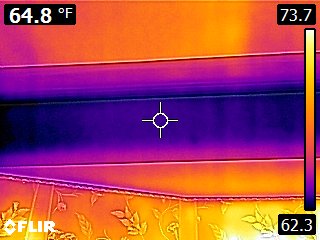
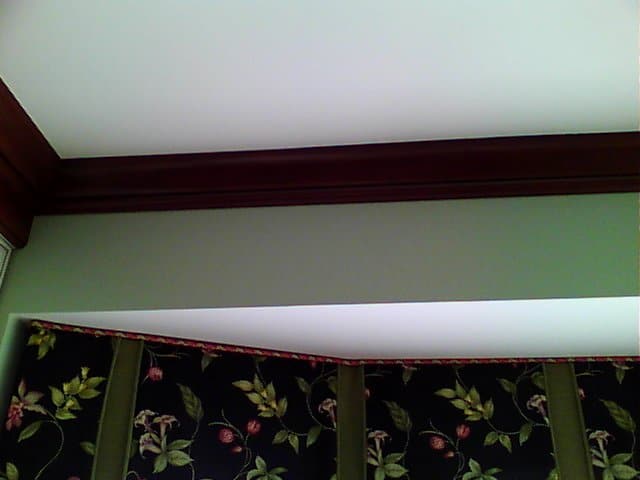
Thermal image: The infrared image shows a long, cold band across the bump-out area. This darker section indicates significant heat loss compared to the surrounding walls and ceiling.
Standard photo: In the visible-light photo, everything looks perfectly normal. There’s no obvious clue that this part of the home is under-insulated or poorly air sealed.
What’s happening: Bump-outs often extend beyond the main foundation and can be difficult to insulate properly. In cold weather, missing or compressed insulation in these areas becomes immediately visible with thermal imaging.
Example 2: Cold air leaking where the wall meets the floor
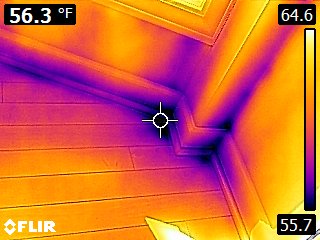

Thermal image: The infrared image shows cold temperatures concentrated along the base of the wall, right where it meets the floor.
Standard photo: The finished flooring and trim look intact. There’s nothing visually wrong.
What’s happening: This pattern is a classic sign of air leakage. Cold outdoor air is being pulled in through gaps in the building envelope, often at rim joists or framing transitions. In winter, these leaks show up clearly because the incoming air is much colder than interior surfaces.
Example 3: A window leaking cold air in the corner
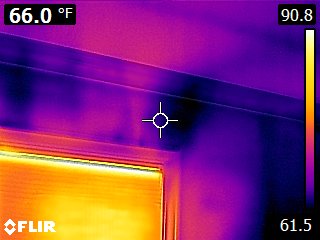
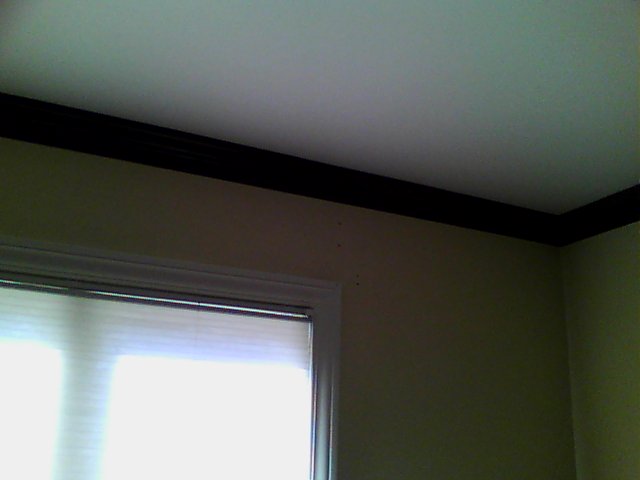
Thermal image: The upper corner of the window frame appears much colder than the surrounding wall.
Standard photo: The window looks well-installed and properly trimmed.
What’s happening: Even high-quality windows can leak air if the perimeter wasn’t air sealed correctly during installation. Cold weather exaggerates these leaks, making it easy to pinpoint exactly where improvements are needed.
The best time to schedule thermal imaging
Winter offers the strongest temperature contrast, which makes infrared images easier to interpret.
In cold Michigan weather, thermal images often show dark purple or deep blue streaks that clearly highlight:
- Areas where cold outdoor air is leaking in
- Missing or underperforming insulation
- Thermal bridges in framing or bump‑outs
In warmer months, those same issues may still appear on an infrared camera, but they usually show up as lighter color variations, making it harder to judge how severe the air leakage really is.
If a bedroom, addition, or living space in your Southeast Michigan home always feels colder than the rest, winter is often when the answers are clearest.
Ready to take the next step?
Thermal imaging is most powerful when paired with a full home energy audit. At Ecotelligent Homes, we combine infrared imaging with blower door testing and building‑science expertise to diagnose the most common comfort issues in Southeast Michigan homes.
You don’t have to wait for winter to get started—but if one room always feels colder than the rest, now is an ideal time to see what’s really going on.
Schedule a home energy audit or call (248) 291‑7815 to talk with our team.
Ecotelligent Homes
Since 2009, Ecotelligent Homes has completed more than 3,000 projects in Michigan. If you need help with new insulation, efficient HVAC, or abatement services, give us a call anytime: (248) 291-7815. Satisfaction guaranteed.
Got a project in mind?
Tell us about your project, and we'll send ballpark pricing in 2 minutes or less.
Categories
- Air Quality
- Air Sealing
- Air Source Heat Pump
- Asbestos
- Attic Insulation
- Cellulose Insulation
- Central A/C
- Crawlspace Encapsulation
- Crawlspace Insulation
- Duct Sealing
- Ecotelligent News
- Energy Audit
- Furnace
- Garage Insulation
- Geothermal Heat Pumps
- Guest Blog Post
- Heating & Cooling
- Homepage feature
- Insulation
- Mold
- Mold remediaton
- Renewable Energy
- Rim Joist Insulation
- Solar Energy
- Spray Foam Insulation
- Uncategorized
- Wall Insulation