Best Insulation for Soundproofing in Michigan (What Actually Works)
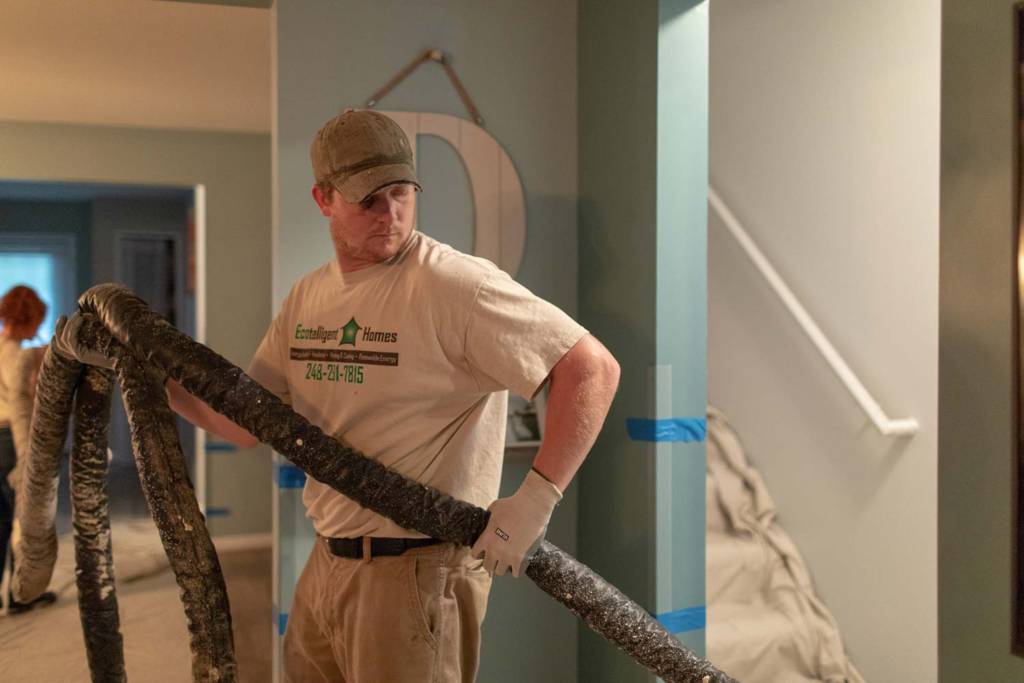
If you’re trying to make your home quieter — whether that’s blocking street noise, reducing sound between bedrooms, or softening footsteps from upstairs — insulation can make a real difference.
But not every type of insulation performs the same for sound control, comfort, or long-term protection. This guide breaks down how each insulation material actually performs in Michigan homes and where each one makes sense.
Please note that soundproofing is nuanced, and what applies in general may not apply to your home in particular. Give us a call at (248) 291-7815, or schedule a home energy audit online.
Since 2009, Ecotelligent Homes has completed more than 6,000 energy audits and 3,000 projects for homeowners in Southeast Michigan. We stand by a price match and satisfaction guarantee for every insulation project.
Table of contents
- How soundproofing insulation is measured
- Soundproofing performance comparison
- Why insulation choice depends on more than sound
- Cellulose insulation: The best all-around insulation for soundproofing
- Spray foam: The best choice for basements & crawlspaces
- When fiberglass or mineral wool make sense
- So what’s the best insulation for soundproofing in Michigan?
How soundproofing insulation is measured
Before choosing an insulation material, it helps to understand the two ratings used to compare sound performance:
Noise Reduction Coefficient (NRC)
- Measures how well insulation absorbs sound within a room.
- Rated from 0.0 to 1.0 (higher = more sound absorption).
- Great for reducing echoes, voices, and general room-to-room noise.
Sound Transmission Class (STC)
- Measures how well a wall assembly blocks sound from traveling through it. Higher STC = quieter rooms and less noise moving between floors or through exterior walls.
Because real-world Michigan homes vary in age, construction, and moisture needs, interpreting these ratings requires nuance. The material with the highest NRC isn’t always the best choice for your home’s structure or your budget.
Soundproofing performance comparison
| Insulation Type | NRC (Absorption) | STC (Blocking) | Best Use Case in Michigan |
|---|---|---|---|
| Dense-pack cellulose | 0.80+ | ~39 | Exterior walls, older homes, retrofits without demolition |
| Loose-fill cellulose (attic floors) | 0.65–0.75 | Varies | Attic floors above bedrooms; reduces outdoor and overhead noise |
| Spray foam (closed-cell) | ~0.70 | ~39 | Basements, crawlspaces, rim joists where moisture control is critical |
| Fiberglass batt | 0.90–0.95 | ~39 | Interior walls with open cavities during remodels or new construction |
| Mineral wool batt | 0.95+ | ~45 | Interior walls with open stud bays where maximum absorption is needed; media rooms or bedrooms |
Why insulation choice depends on more than sound
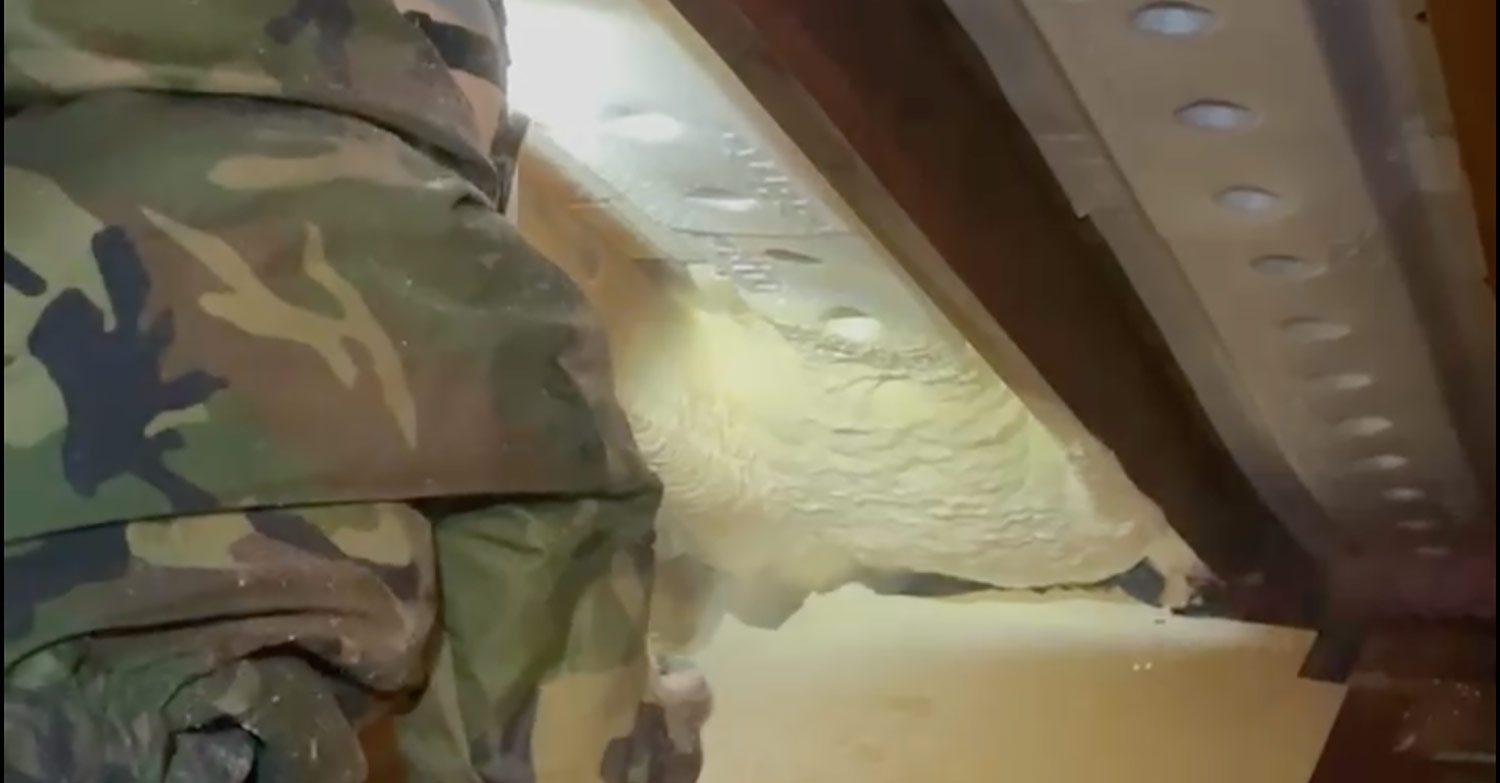
Soundproofing rarely stands alone as a project goal. In Metro Detroit, most homeowners also want:
- Better comfort on all floors
- Lower heating and cooling bills
- Air sealing to stop drafts
- Moisture protection (especially in basements)
- Cost-effective upgrades that don't require opening walls
That’s why Ecotelligent Homes takes a whole-home building-science approach instead of simply picking the highest NRC number.
Below is what we recommend based on Michigan climate, home age, and construction, not just lab-measured sound ratings.
Cellulose insulation: The best all-around insulation for soundproofing
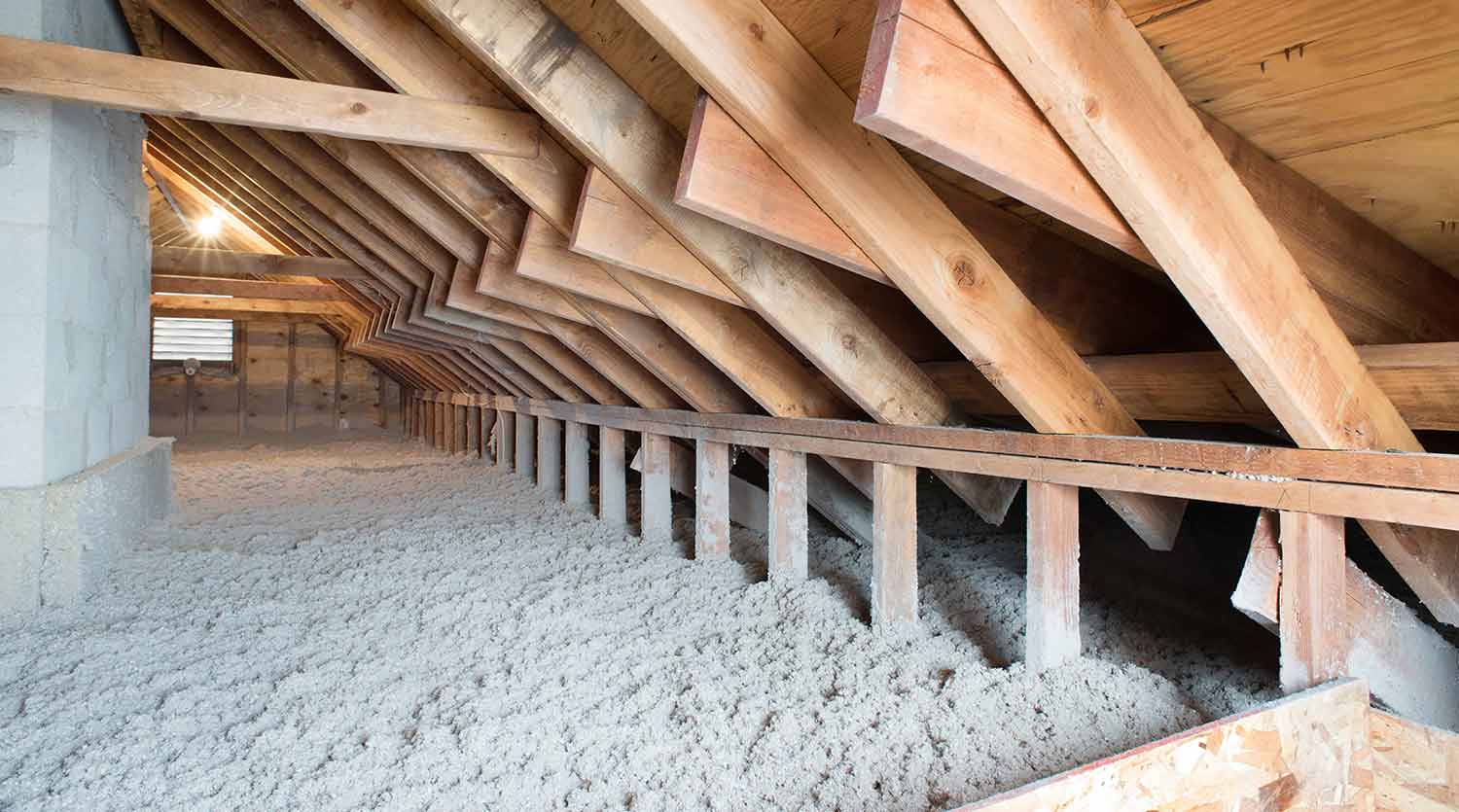
Cellulose hits the sweet spot of performance, cost-effectiveness, and real-world results, especially in Southeast Michigan’s older, draftier homes.
Why we recommend cellulose for wall soundproofing (dense-pack)
Dense-pack cellulose is blown into wall cavities at high density. This completely fills gaps, cracks, and irregular framing typical in homes built before the 1980s.
Benefits:
- High density = excellent sound absorption
- Completely fills cavities, unlike batt insulation
- Reduces outside noise (traffic, neighbors, leaf blowers)
- Great for lowering bedroom-to-bedroom sound
- Ideal for retrofits because walls stay intact
- Strong thermal performance for year-round comfort

“Cellulose makes a dramatic difference in older homes because it fills the wall completely. Eliminating air gaps is half the battle in sound control.”
– Amanda Godward, Owner, Ecotelligent Homes
Why we recommend cellulose for attic soundproofing (loose fill)
Loose-fill cellulose can significantly reduce sound from above, like planes, traffic, even the whooshing of wind across the roof.
Benefits:
- Reduces overhead noise in bedrooms
- Improves comfort and energy efficiency
- Cost-effective to install
- Works well in both older and newer attic assemblies
Most Michigan homeowners don’t think of attic insulation as soundproofing, but adding cellulose to an attic floor often makes the biggest difference in overall home quietness.
Spray foam: The best choice for basements & crawlspaces (because moisture > sound)
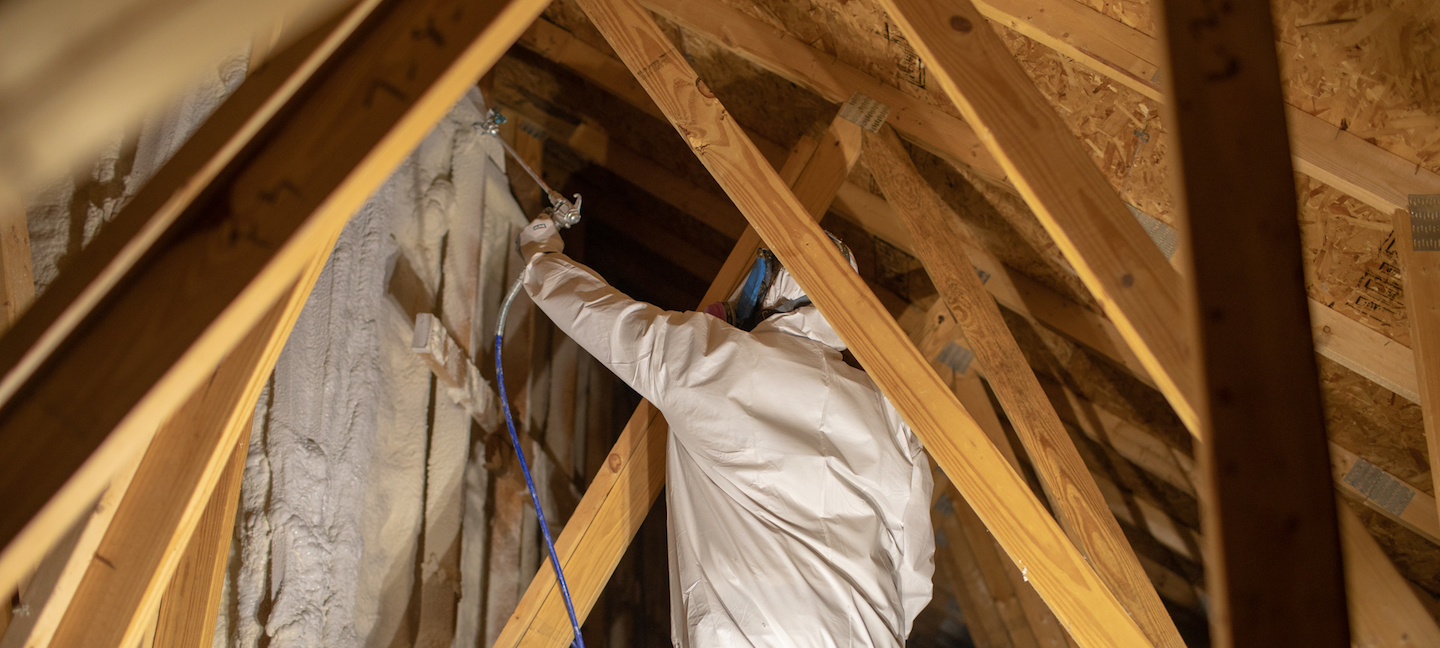
Spray foam is not the top sound absorber. But in Michigan basements and crawlspaces, sound isn’t the biggest problem — moisture is.
Basements have:
- Concrete surfaces that wick moisture
- Rim joists that leak air
- Cold surfaces that can condense humid Michigan air
Spray foam solves those building-science issues better than any other insulation.
Why we recommend spray foam for these spaces:
- Exceptional air sealing
- Moisture resistance
- Prevents mold and condensation
- Strong thermal performance
- Helps with sound by reducing air-leak pathways
“Spray foam isn’t the strongest sound absorber, but it’s the right call in basements and crawlspaces because moisture control protects the home long-term.”
– Amanda
When fiberglass or mineral wool make sense
Mineral wool and fiberglass both have strong acoustic performance, especially in controlled lab conditions. They’re widely used across the country in new construction.
The key is understanding where they work well and where practical constraints limit their value.
Mineral wool (Rockwool)
Mineral wool is one of the strongest sound absorbers available. It’s dense, naturally fire resistant, and easy to fit snugly into an open cavity.
Where it works well:
- Interior walls during remodels when studs are exposed
- Media rooms, home offices, and bedrooms needing maximum absorption
- New construction where all cavities are accessible
Limitations for Michigan homeowners:
- Works best when walls are already open — otherwise installation requires drywall removal, which can significantly increase the price
- Does not provide air sealing, which is important for both sound and comfort
- Not ideal in basements or humid areas where moisture management matters
Fiberglass batts
Fiberglass is the most common insulation in U.S. homes and offers respectable sound absorption at a relatively low price.
Where it works well:
- Interior partition walls during new construction
- Spaces where sound reduction is helpful but not the top priority
Limitations for Michigan homeowners:
- Like mineral wool, fiberglass works best when walls are open
- Performance depends heavily on a perfect fit (gaps and compression reduce sound control)
- Does not air seal or improve moisture management
- Not the best option for irregular framing found in many older Metro Detroit homes
Fiberglass can reduce sound transfer, but its real-world performance often depends more on installation quality than material rating.
So what’s the best insulation for soundproofing in Michigan?
| Category | Best Choice | Why It’s Recommended | Best Michigan Use Case |
|---|---|---|---|
| Best overall for sound + comfort + cost | Dense-pack cellulose (walls) Loose-fill cellulose (attics) |
Excellent sound absorption; fills irregular cavities; strong energy performance; ideal for retrofits | Older homes, exterior walls, attics, homes near roads |
| Best for moisture-prone areas (sound is a secondary benefit) | Closed-cell spray foam (basements & crawlspaces) | Superior moisture control; air sealing; reduces sound leaks through gaps | Michigan basements, rim joists, crawlspaces |
| Best for maximum sound absorption in select rooms | Mineral wool (Rockwool) | Highest NRC rating; dense and rigid; great for open-stud walls | Media rooms, offices, open-wall remodels |
| Best budget option in new construction | Fiberglass batts | Cost-effective; decent sound absorption when installed correctly | New builds, open interior partition walls |
Get a quieter, more comfortable Michigan home
Ecotelligent Homes has provided building-science-backed insulation upgrades in Metro Detroit since 2009. If you're looking to improve comfort, cut noise, and reduce energy bills, we can help. Give us a call today: (248) 291‑7815.

Ecotelligent Homes
Since 2009, Ecotelligent Homes has completed more than 3,000 projects in Michigan. If you need help with new insulation, efficient HVAC, or abatement services, give us a call anytime: (248) 291-7815. Satisfaction guaranteed.
Got a project in mind?
Tell us about your project, and we'll send ballpark pricing in 2 minutes or less.