Best Attic Insulation for Michigan Homes: Cellulose vs. Spray Foam vs. Fiberglass

Your attic might be hotter than you think, and insulation, not a fan, is usually the fix.
Every summer, homeowners across Metro Detroit call us about the same thing. The upstairs is uncomfortably hot, the attic feels like an oven, and the assumption is that the attic needs more ventilation or a fan. Sometimes there's moisture on the roof deck that looks like a leak.
Nine times out of ten, the real problem is a combination of thin insulation and air leaks. Fix those, and the heat, the moisture, and the fan question usually resolve themselves.
This guide compares the three main attic insulation materials for Michigan homes: fiberglass, cellulose, and spray foam. We'll cover what each one does well, where it falls short, and what actually determines whether your attic performs, because the material is only part of the story.
If you have questions about your attic, send us a message, or give us a call at (248) 291-7815. Every project comes with a satisfaction and price-match guarantee.
Since 2009, Ecotelligent Homes has completed more than 3,000 insulation projects across SE Michigan. We're a women-owned, BPI certified home performance contractor, SPFA master certified for spray foam, and a winner of the Consumers Energy Highest Customer Satisfaction Award.
Table of contents
- Quick comparison: attic insulation materials
- Fiberglass: batts and blown-in
- Cellulose: our standard recommendation for attic floors
- Spray foam: the right tool for specific attic jobs
- What actually matters for Michigan attics
- Do attic fans help?
- How an energy audit tells you which insulation is right
- Rebates for attic insulation in Michigan
- Frequently asked questions
Quick comparison: attic insulation materials
| Cellulose | Closed-cell spray foam | Fiberglass | |
|---|---|---|---|
| R-value per inch | ~3.2 to 3.8 | ~6.0 to 7.0 | ~2.2 to 2.7 (blown), ~3.1 to 3.4 (batts) |
| Air movement resistance | Moderate to good | Excellent (air barrier) | Low |
| Fit in older, irregular framing | Excellent | Excellent | Poor (batts), fair (blown) |
| Sustainability | Up to 85 percent recycled paper | Petroleum-based, HFC-free options | Low recycled content |
| Typical attic application | Attic floor | Attic slopes, kneewalls, tight areas | Attic floor |
| Relative cost | $$ | $$$ | $ |
Fiberglass: batts and blown-in
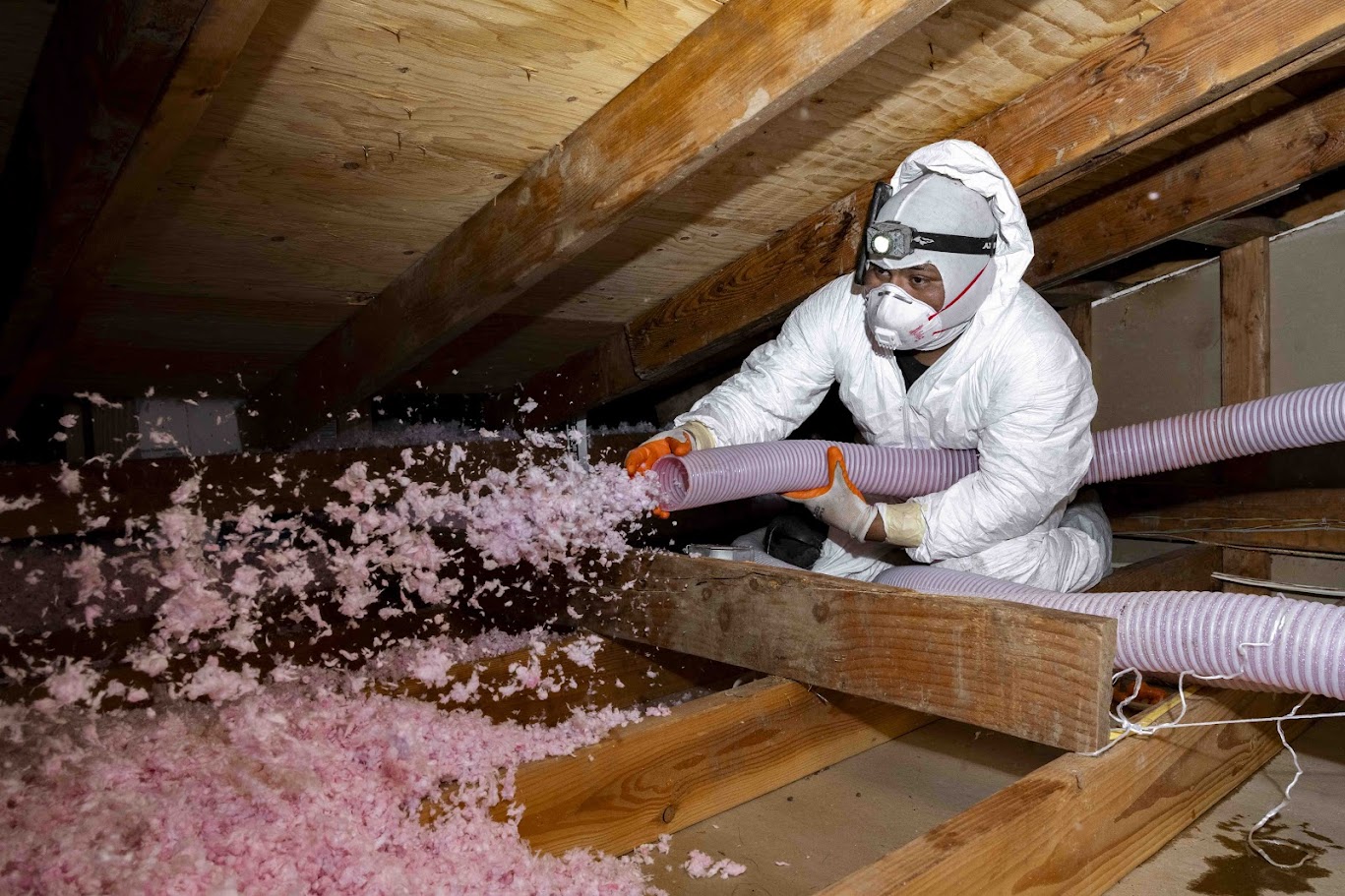
Fiberglass is the most common insulation in Michigan attics, mostly because it's what builders installed by default for decades. If your home was built before the 1990s, there's a good chance you have a few inches of it up there right now.
Batts are the pink or yellow blankets sold at every home improvement store. They can work in perfectly regular framing, but Michigan attics are rarely regular. Every gap, compression, and misaligned edge cuts performance, and batts do nothing to slow air movement. In practice, we find batt installations underperforming their rated R-value in most attics we audit.
Blown-in fiberglass does better because it fills irregular spaces. But it's light and fluffy, which means air moves through it easily. In a cold Michigan attic, that air movement can degrade performance right when you need it most.
Fiberglass isn't a bad material. It's just rarely the best choice for an existing Michigan attic, especially compared to what the same budget buys in cellulose.
Cellulose: our standard recommendation for attic floors
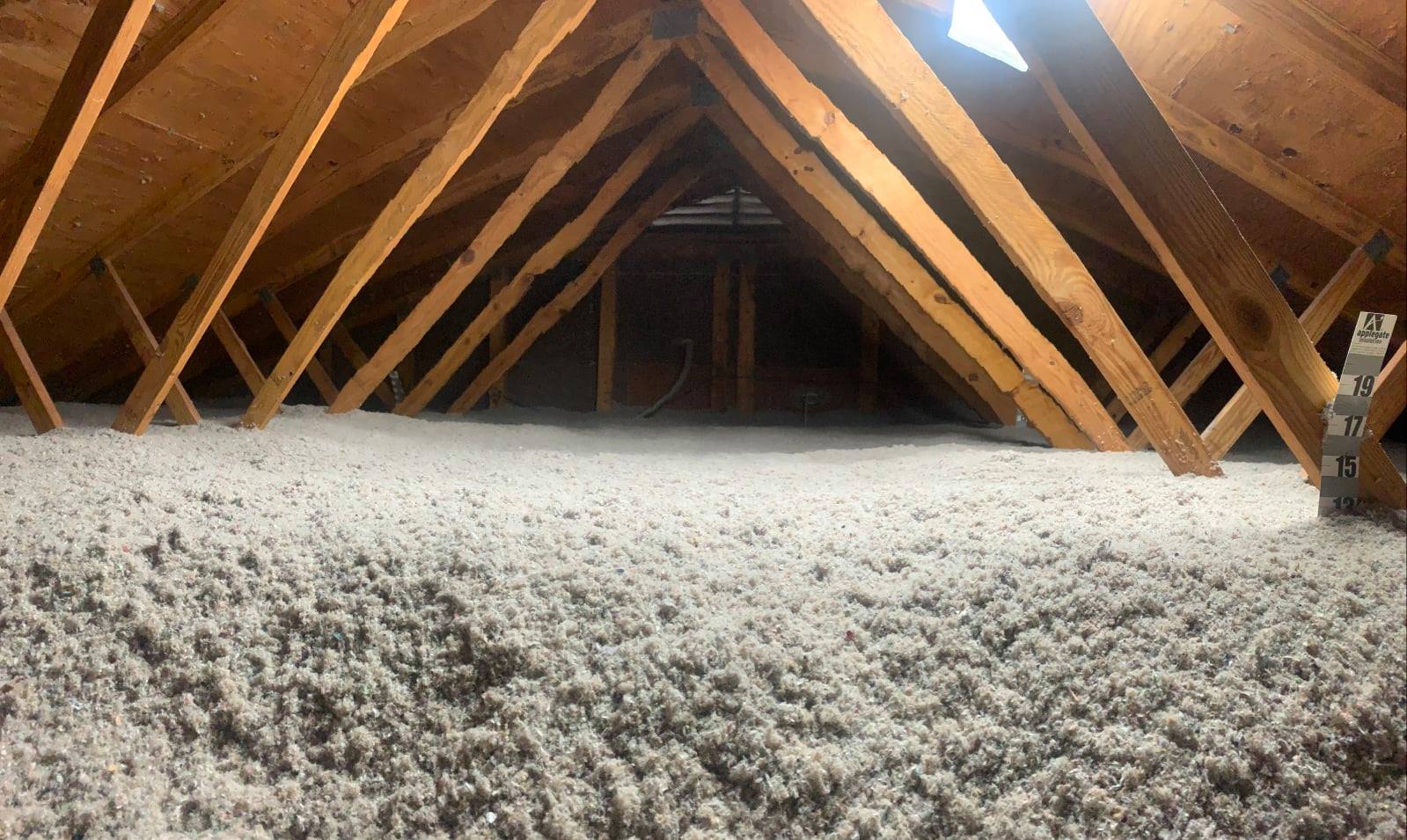
For most existing homes in Metro Detroit and Ann Arbor, blown-in cellulose is what we recommend, and it's what we install in the majority of our attic projects. A few reasons why.
It performs in Michigan's climate. Cellulose is denser than blown fiberglass, which means it resists the air movement that robs attic insulation of performance during cold snaps. It holds its rated R-value better in real winter conditions.
It fits older homes. Cellulose flows into the irregular cavities, odd framing, and tight corners that define homes built in the 1920s through the 1970s. That's most of the housing stock we work in.
It's sustainable. Cellulose is made from up to 85 percent recycled paper, treated with borate for fire and pest resistance. For homeowners who care about the environmental footprint of their home, it's the clear winner among the three materials.
It's cost-effective. You get more R-value per dollar than spray foam, and better real-world performance than fiberglass at a similar price point.
Want to go deeper on the material itself? Jump over to our cellulose insulation resource page.
Two honest caveats. First, cellulose insulates, but it does not air seal. That's why every attic project we do starts with air sealing the attic floor before a single bag of cellulose gets blown in.
Second, you may have read that cellulose settles or absorbs moisture. Both are true of a bad installation, not the material. We blow cellulose to a depth that accounts for settling, so your attic ends up at the target R-value, not below it. And moisture in attic insulation of any type is a symptom of air leaks or ventilation problems, which is exactly what air sealing and properly installed baffles prevent. Fix the system, and the material lasts. It's also why our insulation comes with a Lifetime Manufacturer's Warranty.

Spray foam: the right tool for specific attic jobs
Closed-cell spray foam has the highest R-value per inch of any common insulation, roughly R-6 to R-7, and it's the only material here that insulates and air seals in one step.
That makes it the right choice for:
- Attic slopes and cathedral ceilings, where there's limited depth and no room for a thick layer of loose fill
- Kneewalls and tight transition areas in finished attics and story-and-a-half homes
- The exterior edges of the attic, where low roof pitch leaves only a few inches of clearance. Our crews apply closed-cell foam from the exterior top plate up to the baffle, delivering more than double the insulation of fiberglass or cellulose in those tight but critical areas.
For Michigan's climate zones, we recommend closed-cell over open-cell in the attic. Closed-cell adds a vapor retarder and structural rigidity, both of which matter on a Michigan roof deck. We're one of the only SPFA-certified residential spray foam contractors in Michigan, and the foam we install is HFC-free.
Where spray foam usually isn't worth it: an open attic floor with plenty of depth. In that scenario, air sealing plus blown cellulose delivers comparable performance for significantly less money.
Got a project in mind?
Tell us about your project, and we'll send ballpark pricing in 2 minutes or less.
What actually matters for Michigan attics
Here's the part most comparison articles skip: the material matters less than the system. An attic performs when four things work together.
R-49 minimum
Metro Detroit sits in climate zone 5, where the Department of Energy recommends R-49 to R-60 in the attic. Most existing homes we audit have R-11 to R-19. If your insulation is more than a couple decades old, you almost certainly have less than you think. See our R-value chart for Michigan homes for the full breakdown.
Air sealing first
Warm, humid air from your living space rises through gaps around light fixtures, plumbing chases, and top plates. In summer, that drives up cooling costs. In winter, that moisture hits the cold roof deck and condenses, which is why homeowners call us thinking they have a roof leak when the shingles are fine. Sealing the attic floor before insulating is the single highest-impact step in any attic project.
Ventilation done right
A vented attic needs a clear path for air to enter at the soffits and exit near the ridge. Baffles keep insulation from blocking that path. We install a baffle in every cavity plus a blocker, which goes beyond Michigan code minimums. Our baffles guide covers this in detail, and this quick post shows what happens when baffles are installed wrong.
Vapor control
In climate zone 5, managing moisture is as important as managing heat. Air sealing handles most of it on the attic floor. On attic slopes, closed-cell spray foam provides the vapor retarder.
Get those four right and any of the three materials will perform. Get them wrong and even the most expensive insulation will disappoint.
Do attic fans help? Usually not the way you'd hope

"Every summer we get calls from homeowners who are sure they need an attic fan. Then we run the energy audit, and the attic tells a different story: a thin layer of insulation and air leaks pulling conditioned air out of the house. Once you fix those two things, the fan question usually answers itself."
– Amanda Godward, Owner, Ecotelligent Homes
A hot attic feels like a ventilation problem, so a fan feels like the fix. But a powered attic fan often pulls conditioned air out of your living space through those same attic floor leaks, making your air conditioner work harder. And in winter, that depressurization pulls warm, moist air into the attic, where it condenses on the cold roof deck.
In our experience, attic fans hurt more in winter than they help in summer. Passive ventilation through properly baffled soffits and ridge or roof vents, paired with air sealing and adequate insulation, handles Michigan summers without the downsides. If you have a whole-house fan, that's a related but separate question, and we broke it down here.
If your upstairs is hot right now, the more likely culprits are covered in Why Is My Upstairs So Hot?
How an energy audit tells you which insulation is right
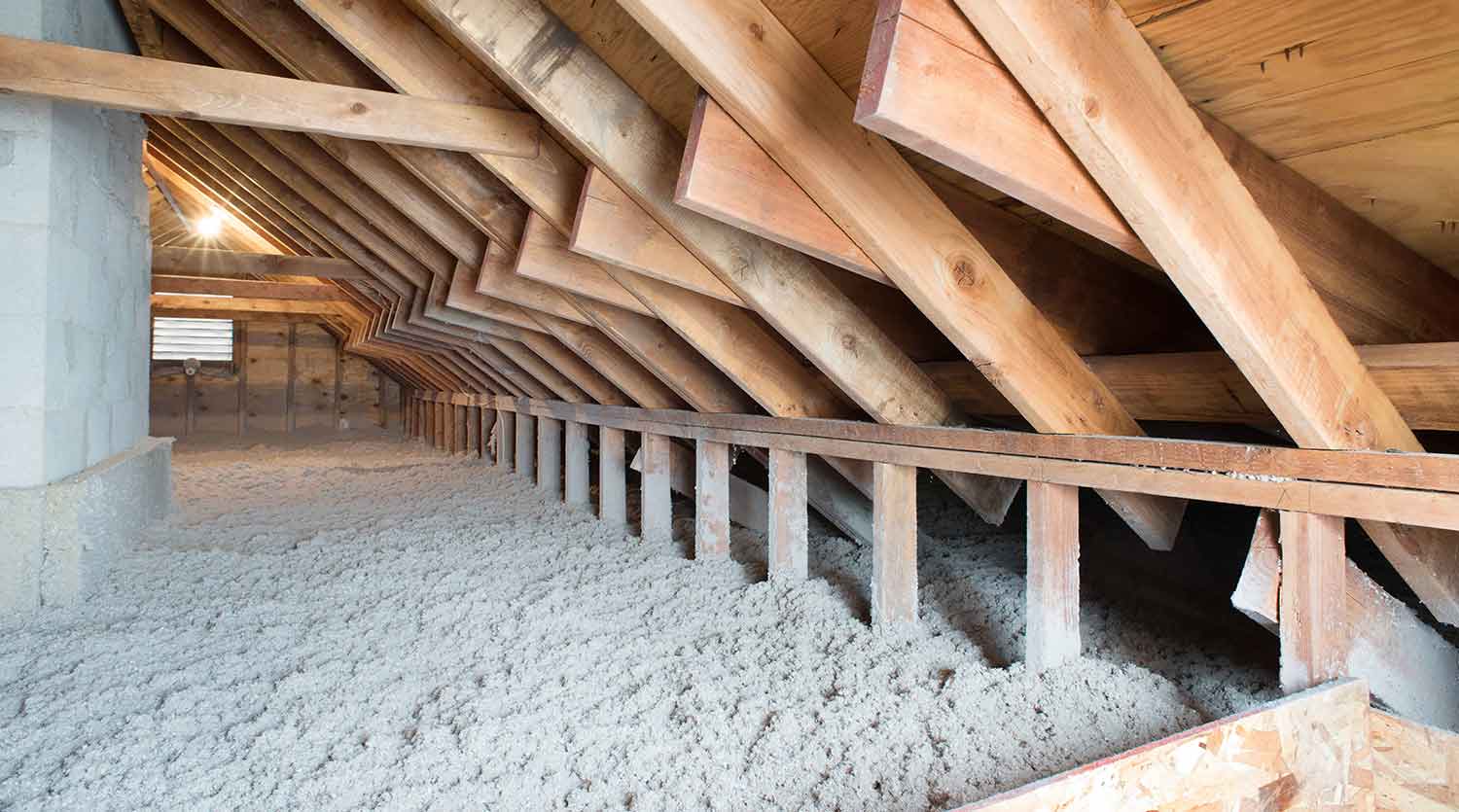
Every home is different, which is why we don't recommend a material until we've tested the house. A comprehensive home energy audit (→ /energy-audits/) includes two to four hours of diagnostic testing, including a blower door test that measures exactly where and how much air your home is leaking.
The audit tells us whether your attic needs air sealing, how much insulation you actually have versus what you need, whether your ventilation is working, and whether slopes or kneewalls call for spray foam. It also catches the things you can't see from the hatch: blocked baffles, moisture staining, or old vermiculite that needs special handling.
The result is a plan built on measurements, not guesswork. It's always "let me show you why" instead of "take my word for it."
Rebates for attic insulation in Michigan
Attic air sealing and insulation are among the best-supported improvements in both major Michigan utility rebate programs.
DTE Energy offers rebates for attic insulation and air sealing that meet program R-value requirements. Blown cellulose, blown fiberglass, and spray foam projects can all qualify. Details on our DTE rebates page.
Consumers Energy offers similar rebates for insulation and air sealing. Details on our Consumers Energy rebates page.
After your project, we handle the rebate paperwork so you get every dollar you qualify for. For current project cost ranges by material, see our attic insulation cost guide.

Frequently asked questions
What is the best insulation for an attic in Michigan?
For most existing Michigan homes, blown-in cellulose on the attic floor is the best combination of performance, cost, and sustainability, paired with air sealing and proper ventilation. Closed-cell spray foam is the better choice for attic slopes, kneewalls, and tight areas with limited depth.
Is cellulose or fiberglass better for attic insulation?
Cellulose generally outperforms fiberglass in Michigan attics. It has a higher R-value per inch than blown fiberglass, its density resists the air movement that degrades fiberglass performance in cold weather, and it fills the irregular framing common in older homes. It's also made from up to 85 percent recycled material.
How much attic insulation do I need in Michigan?
Homes in climate zone 5, which includes Metro Detroit and Ann Arbor, should have a minimum of R-49 in the attic, with R-60 recommended for maximum efficiency. That's roughly 14 to 18 inches of blown cellulose. Most existing homes we audit have R-11 to R-19.
Do attic fans help cool a house?
Usually not. Powered attic fans often pull conditioned air out of the living space through leaks in the attic floor, and in winter they can pull moist indoor air into the attic where it condenses on the roof deck. Air sealing, adequate insulation, and passive ventilation through baffled soffits solve the underlying problem instead.
Can I add new insulation on top of old attic insulation?
Sometimes, but the attic floor should be air sealed first, and old insulation that's moldy, wet, or contaminated with vermiculite needs to be removed. About 90 percent of our attic projects include removal of old insulation. An energy audit or attic assessment will tell you which situation you have.
Does attic insulation qualify for DTE or Consumers Energy rebates?
Yes. Both DTE Energy and Consumers Energy offer rebates for attic insulation and air sealing that meet their R-value requirements, and cellulose, fiberglass, and spray foam projects can all qualify. Ecotelligent Homes processes the rebate paperwork for you after your project.
Ready to find out what your attic actually needs? Schedule a home energy audit or attic insulation assessment. Call (248) 291-7815 or send us a message anytime.

Ecotelligent Homes
Since 2009, Ecotelligent Homes has completed more than 3,000 projects in Michigan. If you need help with new insulation, efficient HVAC, or abatement services, give us a call anytime: (248) 291-7815. Satisfaction guaranteed.
Got a project in mind?
Tell us about your project, and we'll send ballpark pricing in 2 minutes or less.