Attic ventilation calculator: Do you really need more vents?
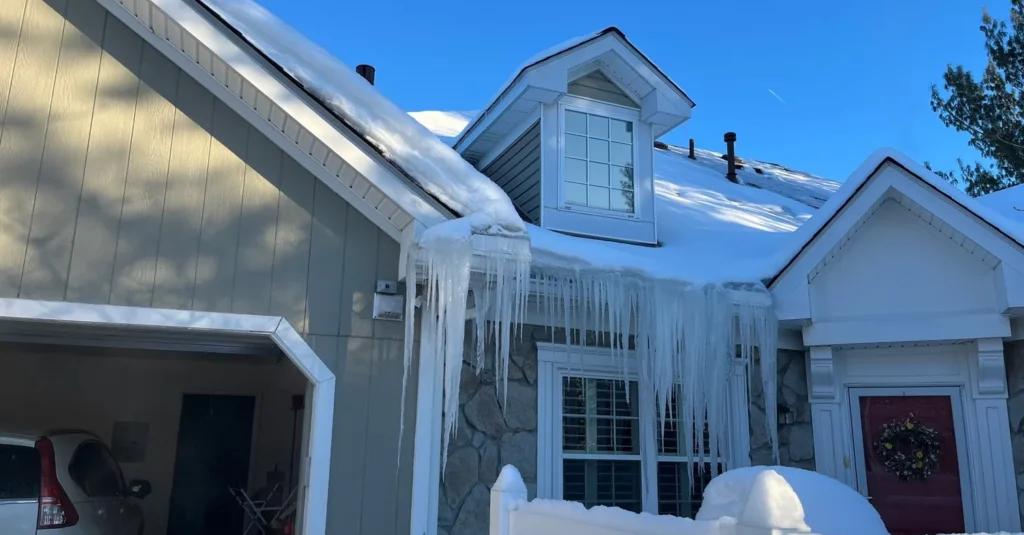
Short answer: In most Michigan homes we see, ice dams and long icicles don't mean you need more vents. They mean warm air is leaking from your living space into the attic, melting the snow on your roof so the water refreezes at the edge. Air sealing and insulation fix that. Vents help only after the leaks are sealed.
The technical side: code calls for 1 square foot of net free area (the open vent space after screens and louvers) per 150 square feet of attic floor, or 1 per 300 when vents are split between low and high. Most attics already meet it.
What net free area means
Every vent has two sizes. One is printed on the box. The other is how much air can really pass through once you subtract the screen and the louvers. That second number is the net free area.
A 16 by 8 inch soffit vent is 128 square inches on paper. Depending on the product, the open area can be less than half of that.
How to calculate it
Take the square footage of your attic floor and divide by 150. The answer is the square feet of net free area you need. If your vents are split between the low edge (soffits) and the high point (ridge or roof vents), you can divide by 300 instead.
For a 1,200 square foot attic:
- At 1:150, you need 8 square feet of net free area, or 1,152 square inches.
- At 1:300, you need 4 square feet, or 576 square inches.
Aim for roughly half low and half high. To run your own numbers, use the Owens Corning roof ventilation calculator. Enter your attic size and vent type, choose 1:150 or 1:300, and it does the math.
Why a ventilation number won't stop icicles
Ice dams start inside the house. Warm air leaks through gaps in the attic floor, around bath fans, recessed lights, attic hatches, and open wall cavities. That heat warms the roof deck and melts the snow from underneath. The water runs down and refreezes at the cold edge of the roof.
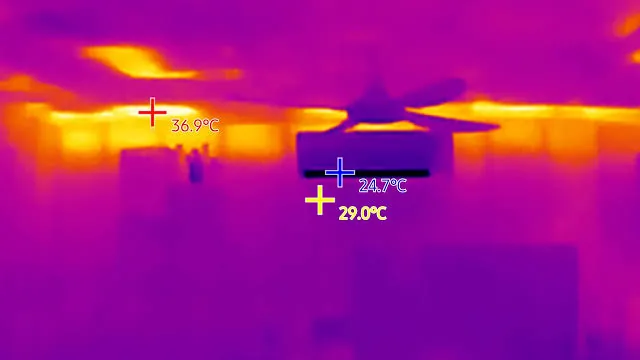
Vents move air through the attic. They don't stop the leaks feeding it. Building scientists have said for years that ice dams are an air sealing problem first, and that more ventilation helps only after you've sealed and insulated. On a leaky attic, extra exhaust can even pull more heated air up through the ceiling.
What we check in your attic
- Soffits: open, not painted over or packed with insulation.
- Baffles: one in every rafter cavity, with a blocker so insulation stays out of the soffit. Here's how baffles work.
- Air leaks: at the attic floor, around fans, lights, hatches, and chases.
- Rusted roof nails: a sign that warm, moist air has been condensing on cold surfaces.
- Insulation depth: and whether tight spots need closed-cell spray foam to reach the right R-value.
Most attics our team inspects already have enough ventilation. Sometimes the soffits have been painted over, and we recommend opening them.
A Michigan example
Christine, a Michigan homeowner, had icicles up to 4 feet long. We air sealed and insulated her attic. Eight months later she wrote in a Google review: "No more icicles and prior, they were up to 4' long!"
Here's what that kind of work looks like. Your ceiling has gaps and holes where warm air leaks up into the attic, around wiring, plumbing, light fixtures, and the attic hatch. Sealing them is what actually stops ice dams and icicles.

Questions to ask any contractor
- What is causing the icicles on this house?
- Will you air seal the attic floor before adding insulation?
- If you're adding vents, why does this attic need them?
- How will you keep insulation from blocking the soffits?
A quote with a ventilation number that skips these questions is solving the easy part.
Attic ventilation FAQ
Do I need more attic vents? Probably not, if your soffits are open and your attic is air sealed. Run the calculator first.
How much attic ventilation do I need? One square foot of net free area for every 150 square feet of attic floor, or one for every 300 when the vents are split between low and high.
Do ridge vents stop ice dams? Not by themselves. They help move heat and moisture out, but they don't stop warm air from leaking in.
Can too much ventilation hurt? Yes. Unbalanced exhaust can pull heated air through ceiling gaps, which is another reason to air seal first.
Next step
If you have a quote in hand, or icicles on your roof every winter, we'll take a look. Call (248) 291-7815 or schedule an energy audit. Related: attic insulation, insulation services, home energy audits, and air sealing.

Ecotelligent Homes
Since 2009, Ecotelligent Homes has completed more than 3,000 projects in Michigan. If you need help with new insulation, efficient HVAC, or abatement services, give us a call anytime: (248) 291-7815. Satisfaction guaranteed.
Got a project in mind?
Tell us about your project, and we'll send ballpark pricing in 2 minutes or less.