Rim joist insulation in SE Michigan: Materials, cost, and what we recommend

Ecotelligent Homes has insulated rim joists in thousands of Michigan homes. As one of the only SPFA-certified residential spray foam contractors in Michigan, we use closed-cell spray foam because it's the right material for our climate - not because it's the easiest option to sell. If you want to know what's going on in your home and what it would cost to fix it, we're happy to take a look.
Table of contents
What is a rim joist?
A rim joist - also called a band joist - is the board that runs along the perimeter of your home at the top of the foundation wall, capping the ends of the floor joists. It sits right at ground level, where your home's floor system meets the foundation.
In most homes built before the 1990s, especially in the Detroit Metro area, rim joists were never insulated. The only thing separating that exposed wood from outside air is the sheathing and siding. In Michigan winters, that's not enough.

When rim joists aren't properly insulated, cold air moves freely into the floor assembly. You feel it as cold floors on the first story. You pay for it every month on your heating bill. And in older Metro Detroit homes - ranches, two-stories, homes with Michigan basements or fieldstone foundations - it's one of the most consistent sources of discomfort we find.
How much energy are you losing through rim joists?
Rim joists are one of the most common air leakage points in Michigan homes. Because they run the full perimeter of your house, even small gaps add up fast. Utilities passing through - gas lines, electrical conduit, water supply - create penetrations that let cold air in continuously.
One of the reasons rim joist insulation gets overlooked is that it's out of sight. Most homeowners have never looked closely at the top of their basement walls. But this is where the stack effect begins: cold air enters through gaps at the lower levels of your home, heats up, rises, and escapes through the attic. If the rim joists aren't sealed and insulated, that cycle runs constantly through every Michigan winter.

The Department of Energy notes that air sealing and insulation work together - and rim joists are one of the few places where both problems are concentrated in a single location.
In our experience, homes we treat show meaningful reductions in air leakage at the rim joist. One customer, Geoff H., had a blower door test done before and after we spray foamed his rim joists and crawl spaces - air leaks were reduced by 17%. That's a real, measured number from a real Metro Detroit home.
Three ways to insulate rim joists: how each material works
There are three materials commonly used for rim joist insulation: fiberglass batts, rigid foam board, and closed-cell spray foam. They perform very differently. Here's an honest look at each.
| Fiberglass batts | Rigid foam board | Closed-cell spray foam | |
|---|---|---|---|
| R-value per inch | R-3.0 to R-3.8 | R-4.0 to R-5.0 | R-6.0 to R-7.0 |
| Air barrier | No | Conditional | Yes |
| Vapor resistant | No | Minimal | Yes - Class II at 2" |
| EH recommendation | Not recommended | Better than fiberglass, but not what we use | Our recommendation for Michigan rim joists |
Fiberglass batts
Fiberglass is what you'll find stuffed into the rim joist bays of most older Michigan homes - cut into rectangles and pressed into place. It's cheap and available at any home center. It's also the wrong material for this application and is no longer considered an accepted standard for rim joist insulation.
The core problem is that fiberglass is air-permeable. Cold air moves right through it. In a location like a rim joist - where air sealing is just as important as insulation value - a material that doesn't stop airflow isn't doing the job.
It also holds moisture when condensation forms, which in a below-grade application can cause mold in the wood framing over time. If your basement has old fiberglass stuffed into the rim joists, there's a good chance it's sagging, compressing, or showing signs of moisture damage.
Our take: not recommended. The material is permeable, doesn't air seal, and creates moisture risk in Michigan's climate. We remove it before spraying.
Rigid foam board
Foam board is a step up. Cut-and-cobble foam board - custom cutting rigid foam panels to fit each bay and sealing the edges with caulk or canned spray foam - does provide some air sealing when done carefully. EPS foam board runs around R-4 per inch. XPS (the pink or blue rigid foam) runs around R-5.
The issue is execution. Cut-and-cobble depends entirely on precise edge sealing. If any gap is left - around pipes, at corners, where the wood is irregular - the air sealing benefit is compromised. It also doesn't provide meaningful vapor resistance at typical installation thicknesses, which matters in Michigan's climate zones.
Our take: better than fiberglass, and a reasonable DIY option if done carefully. But it's not what we use, because spray foam handles the same job more completely without the edge-sealing dependency.
Closed-cell spray foam
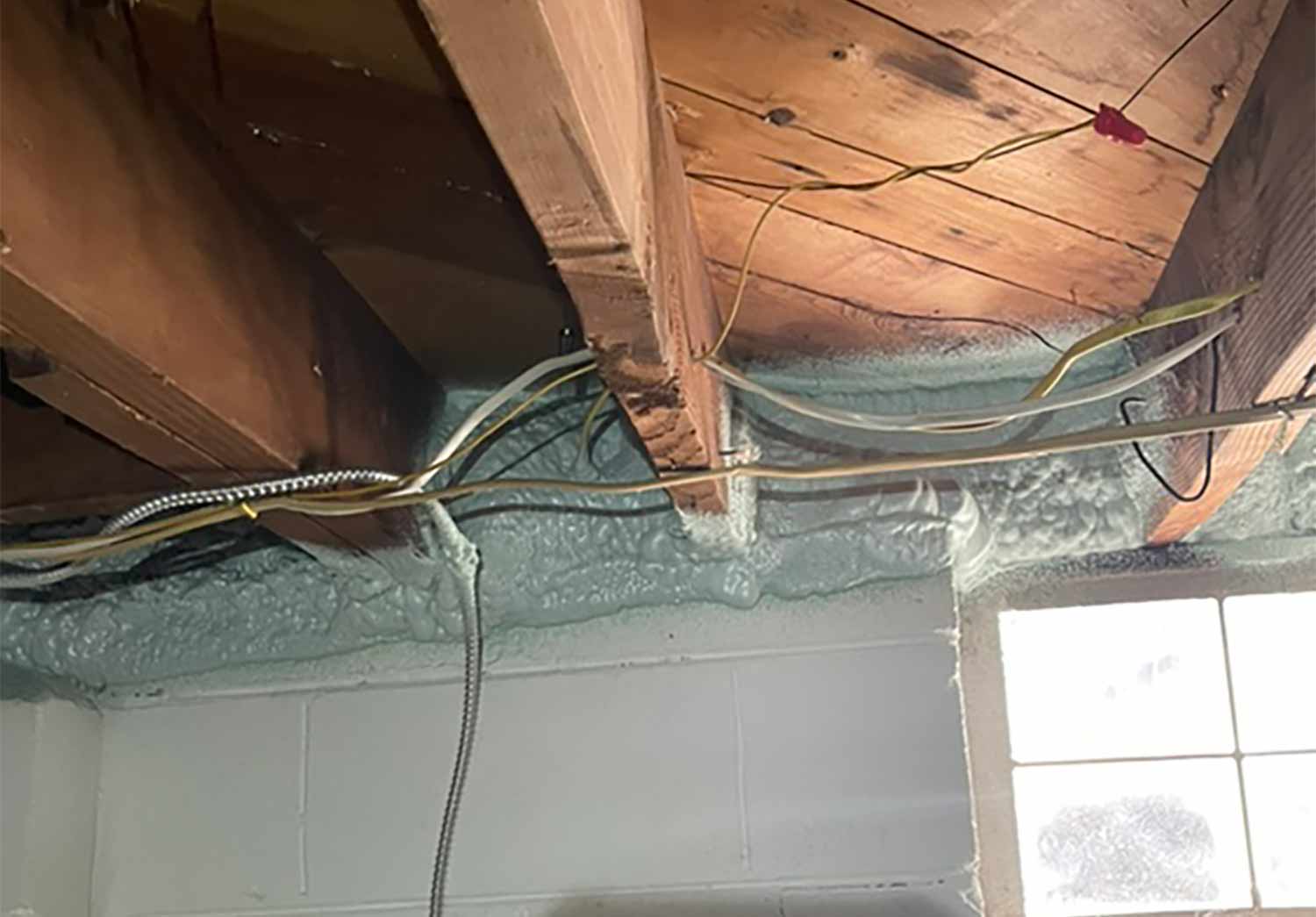
Closed-cell spray foam is what Ecotelligent Homes uses for rim joists. It's spray-applied, which means it expands to fill the cavity completely - including around pipes, wiring, and any irregular framing - and cures rigid. At 2 inches, it functions as both an air barrier and a Class II vapor retarder. There are no edges to seal separately because the foam becomes the seal.
Our take: the right material for Michigan rim joists. It handles insulation, air sealing, and vapor control in one pass, without the execution risk of cut-and-cobble board.
Why we recommend closed-cell spray foam for Michigan rim joists
Michigan sits in Climate Zones 5 and 6. Cold winters create sustained inward vapor drive - warm interior air pushing outward through the building envelope and condensing when it hits cold surfaces at the perimeter. Rim joists are right at that boundary.
Closed-cell spray foam handles three things in a single application:
Insulation. At 2 to 3 inches, you're getting R-12 to R-21 in a location that previously had nothing - or had fiberglass that wasn't performing. That's a real difference in floor temperature and heating load.
Air sealing. The foam expands into every gap and penetration, creating a continuous air barrier that stops the drafts fiberglass doesn't. This addresses the stack effect at its entry point.
Vapor control. At 2 inches, closed-cell spray foam meets the Class II vapor retarder requirement for Michigan's climate zones. Open-cell spray foam and fiberglass do not. This is a code and performance issue, not just a preference. Building Science Corporation's guidance on vapor retarder placement in cold climates confirms this approach.
There are also a few practical benefits that come up consistently in Metro Detroit homes:
- Moisture resistance. Closed-cell spray foam doesn't absorb or retain water. Even if moisture is present near the rim joists, the foam won't promote mold growth the way compressed fiberglass does.
- Pest sealing. The same gaps that let cold air in are the same entry points for mice and insects in winter. Spray foam seals those penetrations completely. It's not a food source for pests, and unlike fiberglass, it doesn't give them nesting material.
- Durability. Closed-cell foam is rigid and doesn't sag, compress, or fall out over time. The materials we use carry a Lifetime Manufacturer's Warranty. That's the last time you deal with rim joist insulation.

"The most common thing I see in older homes is fiberglass batts stuffed into the rim joists, and half the time they're sagging or falling out. Fiberglass does nothing for air sealing, and in Michigan winters, air sealing at the rim joist is the whole point. When we spray closed-cell foam, we're not just adding R-value. We're closing the gaps that have been costing the homeowner money every winter for years."
– Amanda Godward, Owner, Ecotelligent Homes
Got a project in mind?
Tell us about your project, and we'll send ballpark pricing in 2 minutes or less.
What rim joist insulation costs in SE Michigan
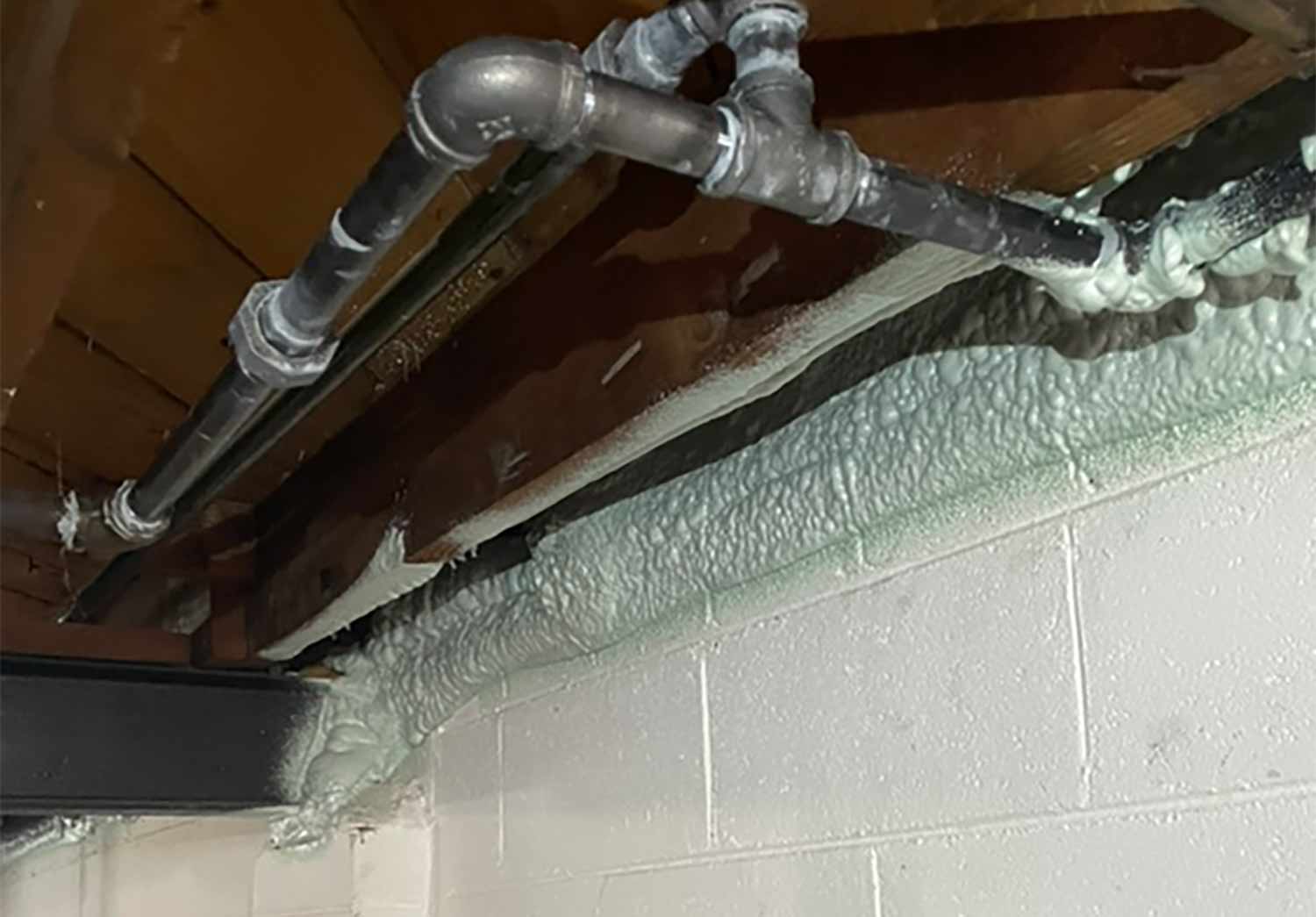
Rim joist insulation is one of the more straightforward projects in terms of how pricing works. The scope is well-defined - it's a linear footage calculation around the perimeter of your home - and access is usually good in an unfinished basement.
What affects the price
- Home size and perimeter footage. A small ranch has less rim joist area than a two-story colonial. Price follows the perimeter.
- Joist bay depth. Older Metro Detroit homes often have deeper floor assemblies, which affects how much foam is needed to reach the R-value target.
- Old fiberglass removal. If existing fiberglass needs to come out before spraying, that adds time. We handle removal and disposal.
- Access complexity. Finished basements, low-clearance areas, or utilities crowding the perimeter walls can affect time required.
Cost vs. other materials
Closed-cell spray foam costs more per square foot than fiberglass or foam board. But for rim joists specifically, the comparison needs to account for what you're getting. Spray foam handles insulation, air sealing, and vapor control in one application. If you need all three - and in Michigan rim joists, you do - the cost per problem solved is competitive with alternatives that require separate steps to achieve the same performance.
For a specific number on your home, use our pricing tool or schedule a free energy audit. The audit gives you a complete picture of your home's priorities, not just a line item for rim joists.
Rebate eligibility: DTE and Consumers Energy
Rim joist insulation may qualify for rebates through your utility depending on your provider and project scope. Both DTE Energy and Consumers Energy have rebate programs for insulation improvements, and rim joist work is often included when it's part of a broader home energy upgrade.
Ecotelligent Homes handles the rebate paperwork. You don't have to navigate the utility programs yourself.
If you're combining rim joist insulation with attic insulation or a full home energy audit, rebate eligibility often increases across the full scope. Our team will identify everything you qualify for before the project starts.
FAQ
How much does rim joist insulation cost in Michigan?
Pricing depends on your home's perimeter footprint, joist bay depth, whether existing fiberglass needs to be removed, and how accessible the basement perimeter is. For most SE Michigan homes, rim joist insulation with closed-cell spray foam is a well-scoped project with a clear cost range - use our pricing tool for a number specific to your home, or schedule a free assessment and we'll walk through it with you.
Is spray foam the best insulation for rim joists?
For Michigan homes, yes. Closed-cell spray foam handles three things that fiberglass and foam board don't do in combination: insulation at R-6 to R-7 per inch, continuous air sealing, and Class II vapor retarder performance at 2 inches of thickness. In Climate Zones 5 and 6, that vapor resistance matters because Michigan winters drive moisture through the building envelope at exactly the locations where rim joists are exposed. It's also spray-applied, which means it fills around pipes, wiring, and irregular framing that cut-and-cobble foam board would leave with gaps.
Can I insulate my rim joists myself?
Fiberglass and rigid foam board are DIY-possible. Closed-cell spray foam is not - it requires professional equipment and training to apply correctly and safely. If you're set on a DIY approach, rigid foam board done carefully with fully sealed edges is a better option than fiberglass. For most homeowners, the performance gap between DIY foam board and professional spray foam is significant enough that it's worth getting a quote first.
Does rim joist insulation qualify for rebates in Michigan?
It may, depending on your utility and project scope. DTE Energy and Consumers Energy both have active rebate programs, and rim joist work is often included when it's part of a broader efficiency upgrade. Ecotelligent Homes handles the application process. Check our DTE rebate page and Consumers Energy rebate page for current program details.
What is a band joist, and is it the same as a rim joist?
Yes - band joist and rim joist refer to the same structural element. Both describe the board that runs along the perimeter of the floor system at the top of the foundation wall, capping the ends of the floor joists. You'll see both terms used in insulation and building science literature. At Ecotelligent Homes, we use "rim joist" as our standard term, but if a contractor or energy auditor refers to your band joists, they mean the same thing.
Should I start with an energy audit or go straight to a rim joist estimate?
If you know rim joists are the problem - you've got cold floors and the rim joist area is clearly uninsulated or stuffed with old fiberglass - going straight to an estimate is reasonable. If you're not sure what's causing cold floors or high bills, an energy audit gives you a complete picture: blower door testing, infrared scanning, and a prioritized list of what to address and in what order. We often find that rim joists and attic insulation are the top two priorities in the same home, and addressing both together maximizes your rebate eligibility.

Ecotelligent Homes
Since 2009, Ecotelligent Homes has completed more than 3,000 projects in Michigan. If you need help with new insulation, efficient HVAC, or abatement services, give us a call anytime: (248) 291-7815. Satisfaction guaranteed.
Got a project in mind?
Tell us about your project, and we'll send ballpark pricing in 2 minutes or less.