Why thermal imaging works best when it’s cold outside
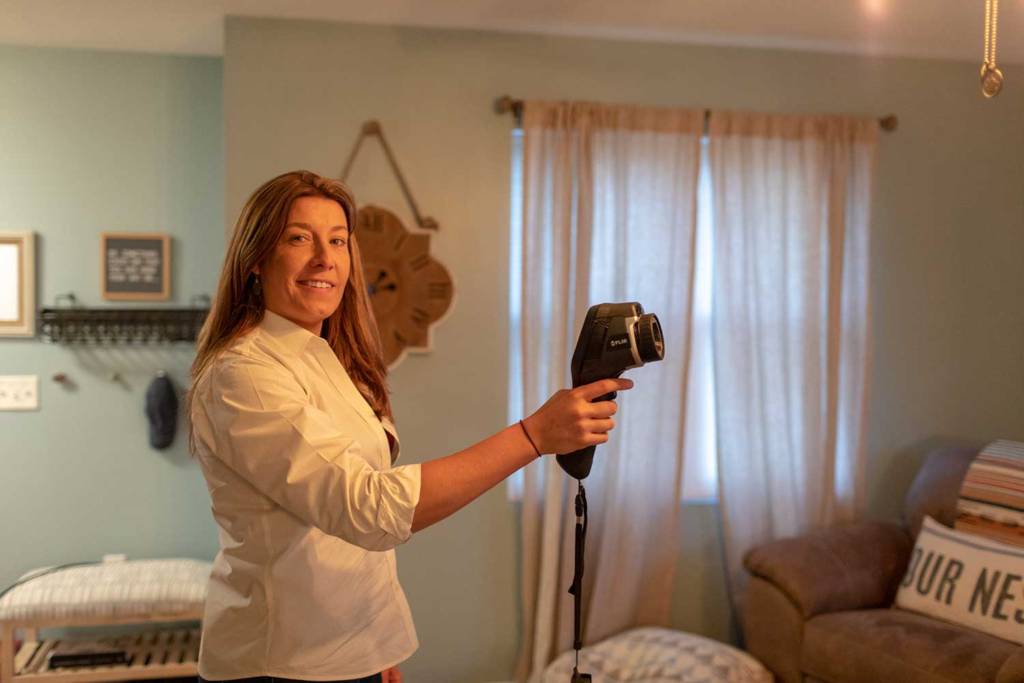
Home energy audits aren’t seasonal. They can be done year‑round and still provide clear guidance on comfort, efficiency, and indoor air quality.
Thermal imaging is just one part of that process. It’s a tool that works best when there’s a strong temperature difference between indoors and outdoors.
That’s why cold Michigan weather gives us such clear insight into where a home is losing heat. If one room in your home always feels colder than the rest, winter is often the best time to find out why.
Give us a call at (248) 291-7815, or schedule a home energy audit online.
Since 2009, Ecotelligent Homes has completed more than 6,000 energy audits and 3,000 projects for homeowners in Southeast Michigan. We stand by a price match and satisfaction guarantee for every insulation project.
Why cold weather makes problems visible
Here in Southeast Michigan, long heating seasons and below-freezing temperatures put real stress on a home’s insulation and air sealing.
Thermal imaging works by detecting temperature differences across surfaces. When it’s cold outside and warm inside, those differences become much more pronounced.
That temperature contrast makes hidden problems—like missing insulation, air leakage, and thermal bridging—show up clearly on an infrared camera.
In milder weather, those same issues may still be present, but they’re harder to detect. During a Michigan cold snap, they practically announce themselves.
How thermal imaging actually works
An infrared (IR) camera doesn’t see air movement or insulation directly. Instead, it shows surface temperatures.
Colder colors indicate areas where heat is escaping or cold air is intruding. Warmer colors indicate surfaces retaining heat.
When indoor and outdoor temperatures differ by at least 10 degrees, the results from infrared imaging are far more reliable.
That’s why winter conditions in Southeast Michigan are ideal for using this tool to pinpoint comfort and efficiency issues.
Real-world examples: what cold weather reveals
Below are examples from an actual home in Plymouth, MI that shows why cold conditions matter so much when diagnosing comfort issues.
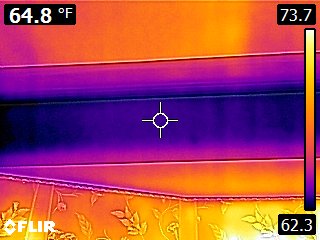
Thermal image: The infrared image shows a long, cold band across the bump-out area. This darker section indicates significant heat loss compared to the surrounding walls and ceiling.
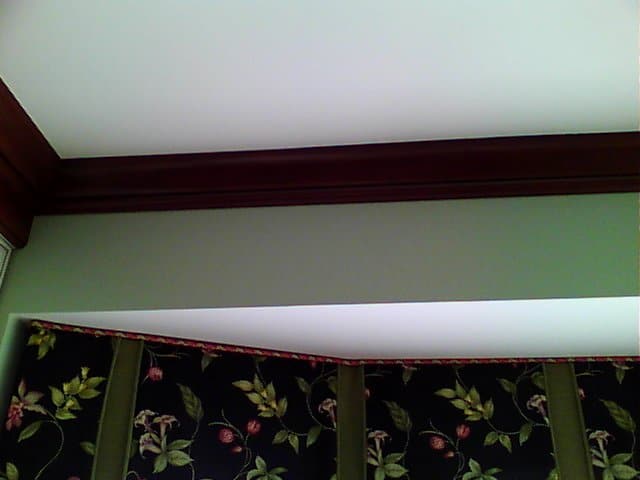
Standard photo: In the visible-light photo, everything looks perfectly normal. There’s no obvious clue that this part of the home is under-insulated or poorly air sealed.
What’s happening: Bump-outs often extend beyond the main foundation and can be difficult to insulate properly. In cold weather, missing or compressed insulation in these areas becomes immediately visible with thermal imaging.
Example 2: Cold air leaking where the wall meets the floor
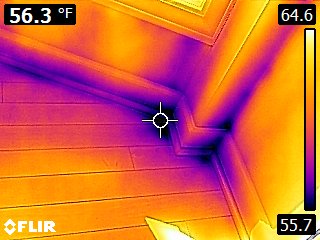

Thermal image: The infrared image shows cold temperatures concentrated along the base of the wall, right where it meets the floor.
Standard photo: The finished flooring and trim look intact. There’s nothing visually wrong.
What’s happening: This pattern is a classic sign of air leakage. Cold outdoor air is being pulled in through gaps in the building envelope, often at rim joists or framing transitions. In winter, these leaks show up clearly because the incoming air is much colder than interior surfaces.
Example 3: A window leaking cold air in the corner
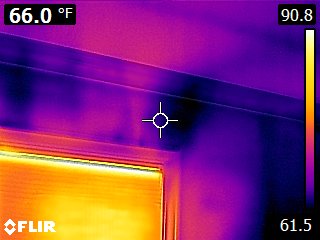
Thermal image: The upper corner of the window frame appears much colder than the surrounding wall.
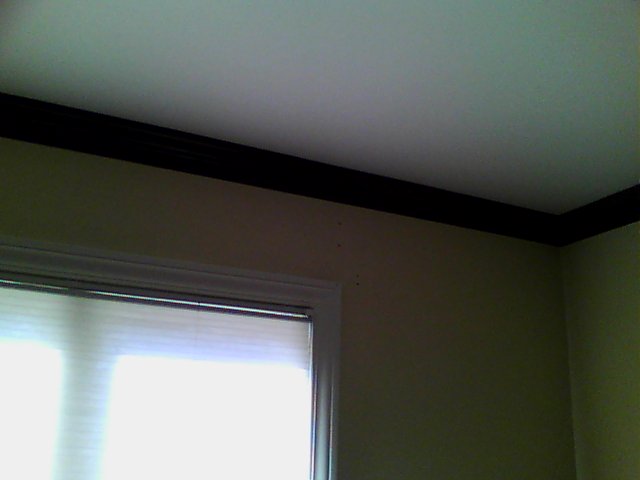
Standard photo: The window looks well-installed and properly trimmed.
What’s happening: Even high-quality windows can leak air if the perimeter wasn’t air sealed correctly during installation. Cold weather exaggerates these leaks, making it easy to pinpoint exactly where improvements are needed.
The best time to schedule thermal imaging
Winter offers the strongest temperature contrast, which makes infrared images easier to interpret.
In cold Michigan weather, thermal images often show dark purple or deep blue streaks that clearly highlight:
- Areas where cold outdoor air is leaking in
- Missing or underperforming insulation
- Thermal bridges in framing or bump‑outs
In warmer months, those same issues may still appear on an infrared camera, but they usually show up as lighter color variations, making it harder to judge how severe the air leakage really is.
If a bedroom, addition, or living space in your Southeast Michigan home always feels colder than the rest, winter is often when the answers are clearest.
Ready to take the next step?
Thermal imaging is most powerful when paired with a full home energy audit. At Ecotelligent Homes, we combine infrared imaging with blower door testing and building‑science expertise to diagnose the most common comfort issues in Southeast Michigan homes.
You don’t have to wait for winter to get started—but if one room always feels colder than the rest, now is an ideal time to see what’s really going on.
Schedule a home energy audit or call (248) 291‑7815 to talk with our team.

Ecotelligent Homes
Since 2009, Ecotelligent Homes has completed more than 3,000 projects in Michigan. If you need help with new insulation, efficient HVAC, or abatement services, give us a call anytime: (248) 291-7815. Satisfaction guaranteed.
Got a project in mind?
Tell us about your project, and we'll send ballpark pricing in 2 minutes or less.