2026 Pole barn insulation guide for Michigan: Spray foam vs fiberglass rolls

Pole barns are extremely common across Michigan, and many homeowners eventually start researching pole barn insulation when they want to heat a workshop or protect equipment.
But when it comes to insulation, pole barns present a unique challenge.
Unlike traditional homes, pole barns are typically built with post-frame construction, metal siding, and large open cavities. That combination can lead to major temperature swings, condensation, and uncomfortable indoor conditions if the building isn’t insulated properly.
In this guide, we’ll walk through the most common pole barn insulation options, including spray foam and fiberglass rolls, and explain which solutions tend to work best in Michigan’s climate.
Please note that pole barn insulation can vary significantly depending on how the building was constructed and how you plan to use it. If you'd like help evaluating your options, give us a call at (248) 291-7815, or reach out to get a free consultation.
Since 2009, Ecotelligent Homes has completed more than 6,000 energy audits and 3,000 projects for homeowners across Southeast Michigan. We stand behind every insulation project with a price match guarantee and satisfaction guarantee.
Table of contents
- Why pole barns need insulation
- Common pole barn insulation options
- Spray foam insulation for pole barns
- Pole barn insulation rolls (fiberglass)
- Can cellulose insulation work in a pole barn?
- Recommended insulation R-values for Michigan pole barns
- Common pole barn insulation mistake
- Which pole barn insulation works best?
Why pole barns need insulation
Many older pole barns were built without insulation because they were used only for equipment storage.
Today, however, pole barns are commonly used as:
- heated workshops
- vehicle storage
- hobby spaces
- home gyms or recreation rooms
- finished “barndominiums”
When a pole barn is heated or occupied regularly, insulation becomes essential.
Proper pole barn insulation helps:
Control temperature: Michigan winters can be harsh, and uninsulated metal buildings lose heat quickly.
Prevent condensation: Metal siding and roofing can collect condensation when warm indoor air meets cold surfaces.
Protect equipment and tools: Moisture and temperature swings can damage tools, vehicles, and stored items.
Reduce energy costs: Insulated buildings require much less energy to heat or cool.
Common pole barn insulation options
Several insulation materials can be used in pole barns. Each has advantages and drawbacks depending on how the building is constructed and used.
| Insulation | Best for | Key drawback |
|---|---|---|
| Closed-cell spray foam | Heated pole barns, workshops | Higher upfront cost |
| Fiberglass insulation rolls | Budget builds, framed interiors | Air leaks and condensation risk |
| Cellulose insulation | Finished pole barns with drywall | Less common in open post-frame walls |
Because pole barns often use metal siding and large wall cavities, insulation that also provides air sealing and moisture control tends to perform best.
Spray foam insulation for pole barns
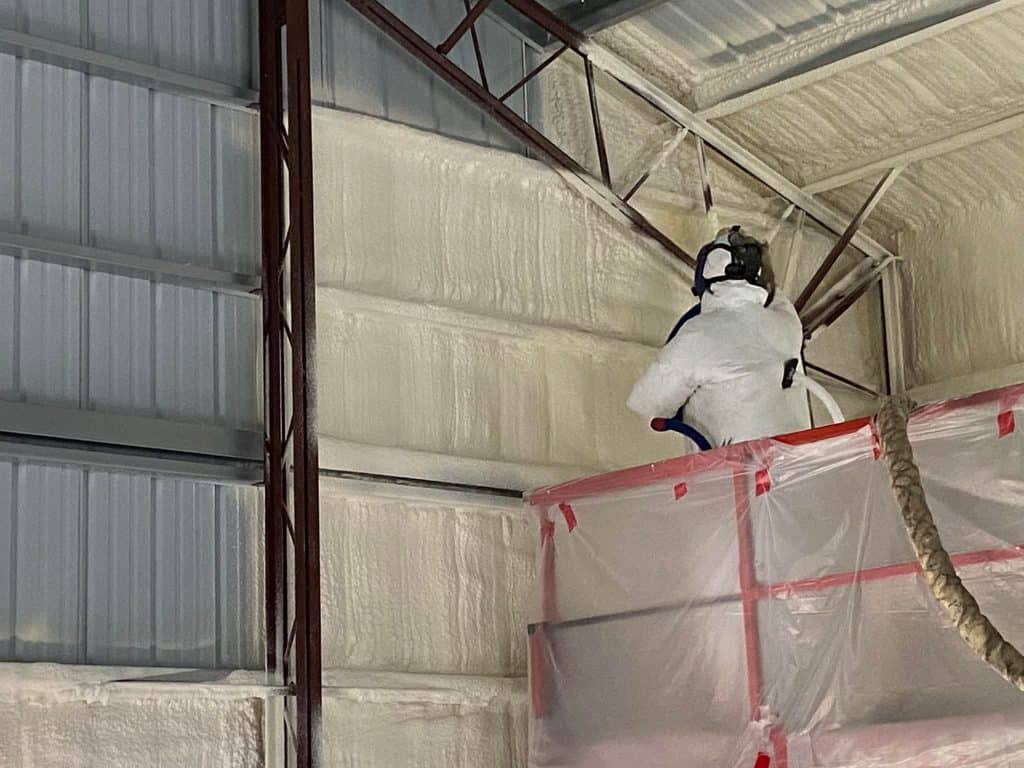
Spray foam insulation is often considered the best-performing insulation for pole barns, particularly when the building has metal siding or is intended to be heated.
Two types of spray foam insulation are commonly used in buildings:
Open-cell spray foam
- lower cost
- good air sealing
- softer and more vapor permeable
Open-cell spray foam is often used inside traditional framed walls in homes. However, it is generally not recommended for most pole barns, particularly those with metal siding or roofing. Because it allows moisture to move through the foam, it can increase the risk of condensation forming on cold metal surfaces.
Closed-cell spray foam
- higher R-value per inch
- strong moisture barrier
- adds structural rigidity
Closed-cell spray foam is typically the better choice for pole barns. When applied directly to metal walls or roof panels, it creates a continuous air and moisture barrier that helps prevent condensation and improve overall energy performance.
Closed-cell spray foam is especially effective in pole barns because it:
- seals air leaks
- helps prevent condensation on metal walls and roofs
- provides excellent insulation in limited space
For these reasons, closed-cell spray foam is often considered the best-performing insulation option for pole barns in Michigan, particularly if the building will be heated or used regularly.
Pole barn insulation rolls (fiberglass)

Fiberglass insulation rolls are one of the most common insulation materials people search for when planning a pole barn project.
They are widely available and relatively inexpensive.
Fiberglass insulation rolls are typically installed between framing members or girts and may be covered with drywall or another interior finish.
Advantages include:
- lower material cost
- easy availability
- familiar installation process
However, fiberglass insulation has some limitations in pole barns.
Fiberglass does not seal air leaks, and in metal buildings it can allow moisture to move through the insulation and condense on cold surfaces.
Common issues include:
- drafts and air leakage
- condensation behind insulation
- reduced performance if insulation becomes damp
In general, we recommend that Michigan homeowners choose a pole barn insulation system that provides air sealing and moisture control, such as closed-cell spray foam.
Can cellulose insulation work in a pole barn?
Cellulose insulation is commonly used in homes, especially for attics and dense-packed wall cavities.
In pole barns, however, cellulose is used less often because the wall structure is different.
Cellulose insulation typically requires:
- enclosed framing cavities
- sheathing or drywall
- dense-pack installation
If a pole barn is finished with interior walls and properly framed cavities, cellulose insulation can work well.
But for many open post-frame buildings, spray foam or other insulation systems are easier to install and perform better.
Recommended insulation R-values for Michigan pole barns
Michigan is located in Climate Zone 5, which means insulation levels should be designed for cold winters.
Typical recommended R-values include:
| Building Area | Recommended R-Value |
|---|---|
| Pole barn walls | R-19 to R-30 |
| Pole barn ceiling or roof | R-38 to R-49 |
| Slab edge or foundation areas | R-10 to R-15 |
Actual insulation levels may vary depending on how the pole barn is used and whether it will be heated year-round.
Buildings used only occasionally may require less insulation than fully conditioned workshops or living spaces.
Common pole barn insulation mistakes
Insulating a pole barn incorrectly can lead to performance problems later.
Some common mistakes include:
Ignoring air sealing
Insulation alone does not stop air movement. Air leaks can dramatically reduce insulation performance.
Moisture problems
Condensation is a common issue in metal buildings, particularly when insulation systems do not include proper moisture control.
Improper vapor barriers
Incorrect vapor barrier placement can trap moisture inside walls or ceilings.
Choosing insulation based only on cost
While fiberglass insulation rolls are inexpensive upfront, they may not deliver the best long-term performance in many pole barns.
Which pole barn insulation works best?

The best pole barn insulation depends on how the building will be used.
However, spray foam insulation often provides the most reliable performance in Michigan pole barns.
| Insulation Type | Best For | Key Advantages |
|---|---|---|
| Spray foam insulation | Heated workshops, finished pole barns | Air sealing, moisture control, durability |
| Fiberglass insulation rolls | Storage buildings or budget builds | Low upfront cost |
| Cellulose insulation | Fully framed pole barns with interior walls | Good thermal performance |
For many homeowners, spray foam insulation is the safe and efficient top choice, offering the best combination of energy efficiency, moisture control, and long-term durability.
Why homeowners choose Ecotelligent Homes
Choosing the right insulation system is important for both comfort and long-term building performance.
Ecotelligent Homes helps homeowners across Southeast Michigan design insulation solutions that work with their building and their goals.
Since 2009, Ecotelligent Homes has completed more than 3,000 home performance projects, helping homeowners improve comfort, reduce energy costs, and protect their homes from moisture problems.
If you're planning to insulate a pole barn, the right approach depends on how the building was constructed and how you plan to use it.
The team at Ecotelligent Homes can evaluate your building and recommend insulation options that improve comfort, control moisture, and reduce energy costs.
Book a free consultation, or call (248) 291-7815 to get started.

Ecotelligent Homes
Since 2009, Ecotelligent Homes has completed more than 3,000 projects in Michigan. If you need help with new insulation, efficient HVAC, or abatement services, give us a call anytime: (248) 291-7815. Satisfaction guaranteed.
Got a project in mind?
Tell us about your project, and we'll send ballpark pricing in 2 minutes or less.